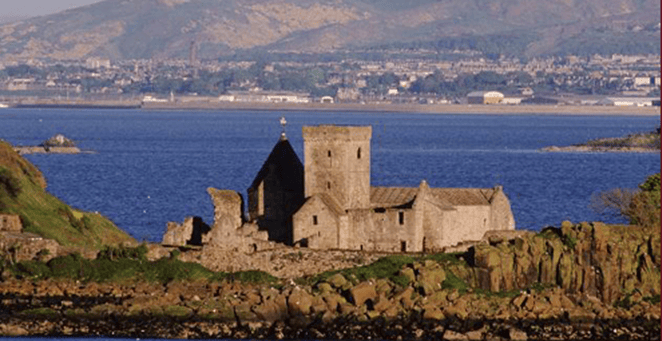
Inchcolm Abbey
Location: Burntisland, Fife KY3 0UA
Telephone: 07918 337097
The island retreat of Inchcolm was home to a hermit in the Dark Ages, and the island’s oldest relic is a 10th-century hogback tombstone. In 1123, Alexander I sheltered here during a storm, and resolved to build a monastery in thanks for his deliverance. But he died in 1124 before being able to keep his promise. It was left to his brother, David I, to invite Augustinian canons to establish a priory on the island.
The 12th-century abbey church was enlarged eastward around 1200. The original church was later converted into the abbot’s residence, and the later church is now mostly wall footings. However, a remarkable 13th-century fresco painting of a funeral procession survives in a tomb recess. Also remarkable are the stone screens dividing the choir from the nave, at the base of the lofty bell tower. The cloister is the most complete in Scotland, and three covered cloister walks survive. The octagonal chapter house dates to the 13th century. It has a fine warming room above it. The dormitory, refectory and other rooms also survive roofed.
In the later Middle Ages, Inchcolm was attacked by English ships on numerous occasions, forcing the canons to desert the abbey for periods of time. The story of conflict does not end with the demise of the abbey in the 16th century. In 1795, during the Napoleonic Wars, a gun battery was installed when the French threatened to invade. In the first half of the 20th century, the island was heavily fortified to help defend Edinburgh.
Offer for YAC Pass holders:
Free entry with a valid YAC Pass Card when accompanied by a paying adult