Excavation updates from Inverness YAC!
May 2026
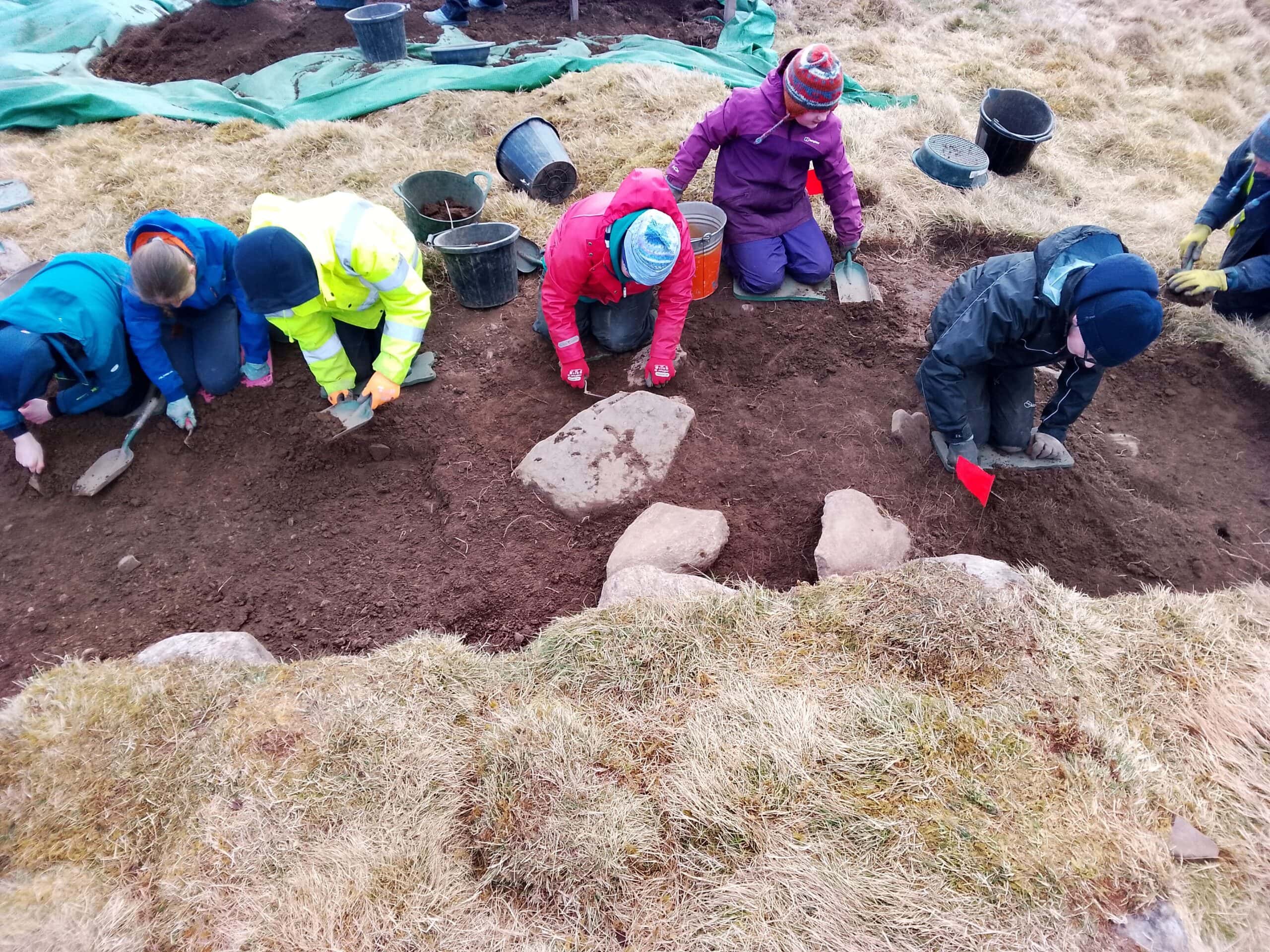
In March 2026 Inverness YAC organised their own archaeological dig at the Heights of Dochcarty near Dingwall, made possible by funds from the National Lottery Heritage Fund. Branch leader Susan shares what they got up as they began to investigate an intriguing round structure…
Going on digs is always one of the favourite activities for members of the Inverness YAC in the north of Scotland. We usually are able to find a dig to participate in – but this year we decided to organise our own dig. There was an enigmatic outline of a round structure on the croft of one of our members. Could this be a prehistoric roundhouse?
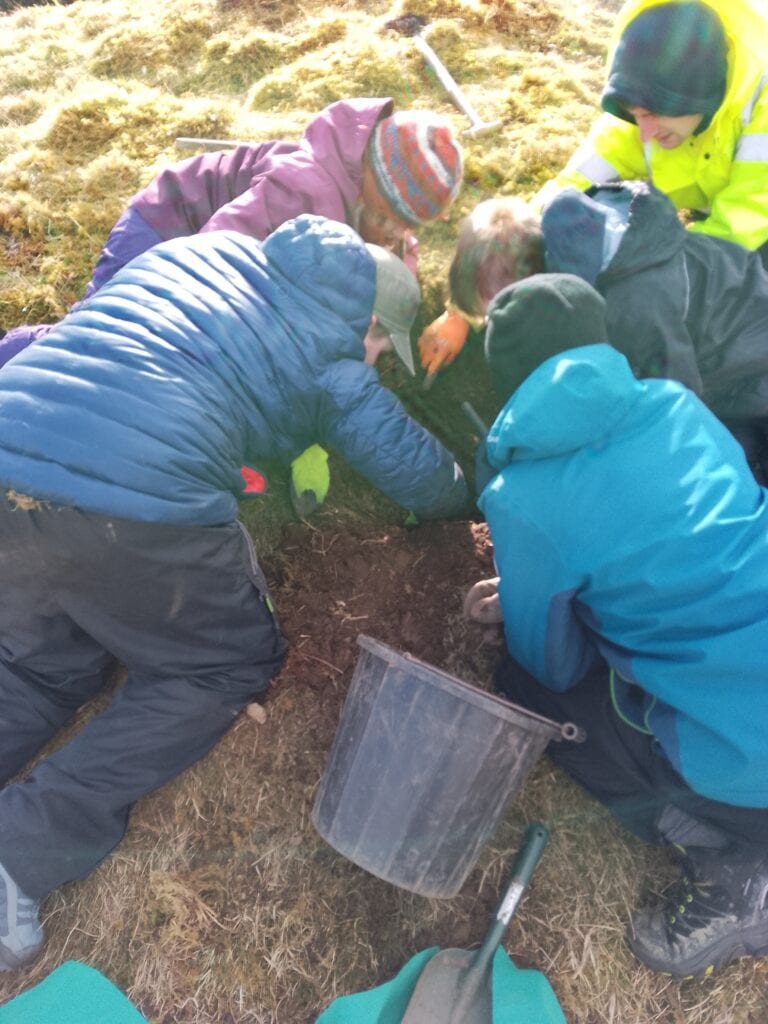
Thanks to funding from the National Lottery Heritage Fund we were able to investigate and answer this question. First we did a desk-based assessment, and concluded that there was no known historical activity in the area which was nevertheless rich in prehistoric remains.
We hired professional archaeologist Lachlan McKeggie of Highland Archaeology Services to lead us. Lachlan was great, ensuring that everyone had a chance to do all aspects of the dig, not just troweling, but also sieving, taking photographs, recording finds and contexts on a tablet and basic conservation. He is currently guiding us in sessions on post-excavation analysis – what you do to analyse your data and finds to create a report. We’re very conscious that when you dig you destroy your evidence, so proper recording and publication are essential.
The weather at the end of March was challenging to say the least, but with full waterproofs and warm layers, and the loan of a robust scout hut, we managed to accomplish quite a lot.
Our blogs about the dig can be found on the Inverness YAC website https://www.spanglefish.com/invernessyac/blog.asp
As with many excavations, you don’t always find what you expect. Our roundhouse turned out to be a probable 19th-century enclosure, probably for animals, with a stone building at one end and a nearby midden. However, we did succeed in our main aim, which was to learn how to do proper investigations, excavations techniques and post-excavation analysis. We’re keen to continue digging!
Our hope with running this dig was also that it would increase our membership – and it did, we doubled our membership!