
Creating Nature-inspired Archaeology Activities: Emily
To celebrate the 2026 Festival of Archaeology, the Young Archaeologists’ Club (YAC) have created a bumper resource pack with six new activity ideas based on the Festival’s theme of Archaeology and Nature.
The pack has been created by members of the Council for British Archaeology’s Youth Advisory Board (YAB) and university placement students.
YAB member, Emily Wynne, tells us about what inspired her to create a new activity that looks at how Ancient Egyptian make-up was made from the world around them.
My activity was inspired by a visit to Manchester Museum, where I saw some Predynastic Egyptian siltstone palettes shaped like fish, turtles and birds. I was fascinated by these objects, and they immediately came to mind when I was thinking of ways archaeology links to nature to create my resource. I study Museum Studies and often get inspiration for fun activities relating to archaeology from my visits to museums. The palettes are animal shaped, and quite simple in their shape and design, so I initially thought they would make an easy but fun activity centred around clay. I wanted to create a hands-on activity where you can actually touch and create your own object, as sometimes a challenge of only seeing these objects in museums is that you can’t learn through touch. I noticed this in my job leading school trips to a heritage site that any chance to hold or touch replica objects aids children in understanding how objects were made and used.
As I read more about these palettes (and watched some Horrible Histories clips) I found that they were used for mixing and grinding minerals down to make makeup products, like malachite to make green eyeshadow. Minerals are a great example of something you would not immediately think of as part of ‘nature’ and the ‘natural world’, but without them, as I mention in the resource, there would be no rocks, soils, plants, animals or even people, because we all need minerals to grow and survive. My activity is called ‘Ancient Egyptian makeup tutorials’. Completing this activity will help you learn about how the iconic makeup looks we see on sarcophagi and statues, like bold eyeliner and bright eyeshadow have a close link to nature. Children can create a makeup palette and learn about the different minerals used to make ancient Egyptian makeup!
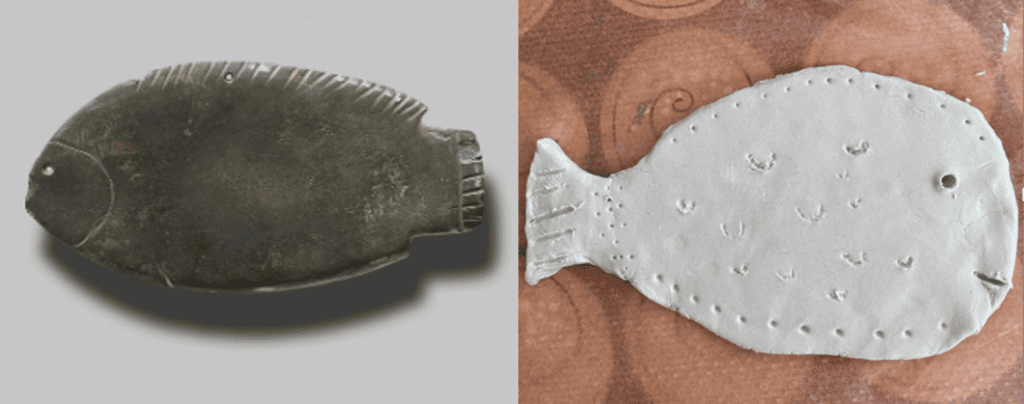
I aim to share through this activity how analysing archaeological objects and materials can tell us a lot about people in the past and how they interacted with and understood the natural environment they lived in. For example, archaeologists use scientific techniques like X-Ray Fluorescence to find where the siltstone or minerals on the palettes were mined based on elemental signatures, or to identify what minerals were used. As children and young people shape their clay palette into different animals, hopefully they can imagine where the Ancient Egyptians might have met these animals, maybe they spotted birds flying across the desert, or saw fish swimming through the River Nile or swimming across crop fields in the floodplain when the river flooded. Children can also learn where the minerals used to create the makeup came from, some were also quarried and mined, but some were traded from distant places. Through completing this activity, children will learn that Ancient Egyptians had a deep knowledge about the natural world.
I hope children and young people who try out this activity have fun playing with clay and get creative in decorating their palette to look like whichever animal they choose. Creating this resource was really rewarding; I was able to make my own palettes to help write the instructions and picture guides, and found it a really mindful and fun activity. I enjoyed thinking of creative activities and examples of how archaeology relates to nature. It was a challenge to introduce scientific techniques without making it too complicated and boring. However, it was important to share not just what we know about these palettes but how we have learned this information, which I hope will inspire young people to learn more about archaeology.
Take a look at Emily’s activity on our website here:
You can also learn more about the resource pack and the many other activities available, from spooky folklore to Norse Runestones!