Make a paper offering for the Ghost Festival

The Ghost Festival is an Asian version of Halloween, which is celebrated by Buddhist and Taoist communities in China, Japan, Singapore, and other Asian countries. For example, the Japanese celebrate the Ghost Festival with a folk dance called “Bon Odori” to welcome ghosts and spirits. People in Chinese communities believe that ghosts and spirits from hell are permitted to visit the earth in the seventh month of the lunar calendar to search for necessities and entertainment. People make food offerings, paper offerings, and even Chinese opera performances to satisfy those ghosts so they don’t cause trouble.

The Chinese developed a unique paper crafting technique to make paper offerings and other crafted products used in various traditional festivals and religious rituals. Craft masters traditionally use bamboo splints, rice paper strips, coloured papers, and silk fabrics to create various types of paper offerings, such as paper floral tributes, lanterns, and the Ghost King effigies. During the Ghost Festival, people deliver these paper offerings to the ghosts by burning them in the street.

This activity aims to create a paper house with traditional paper crafting techniques and using materials commonly found in the UK. When you’ve mastered the technique of paper crafting, you could try designing and making a modern paper offering, such as a car or a mobile phone!

Teresa Yeung

Adult supervision is not required for this activity.

Type of Activity : Crafting

How many people required (minimum) : 1

Safety Measures : Please ask an adult to help you with scissors.

Ages : 8+

Time Required: 1–2 hours

Step 1

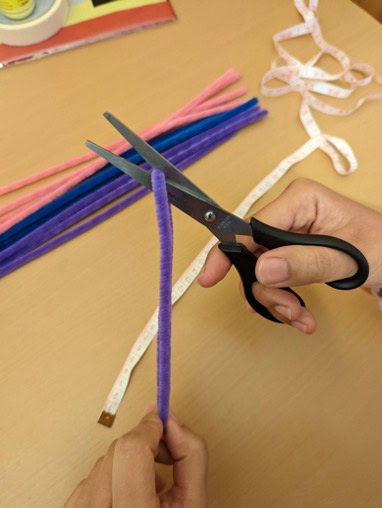
Prepare four 15 cm long and twelve 10 cm long chenille stems (pipe cleaners) for the front and back scaffolds of the paper house. Please be careful when using scissors and bend the ends of the stems over to avoid exposed sharp edges.
Step 2

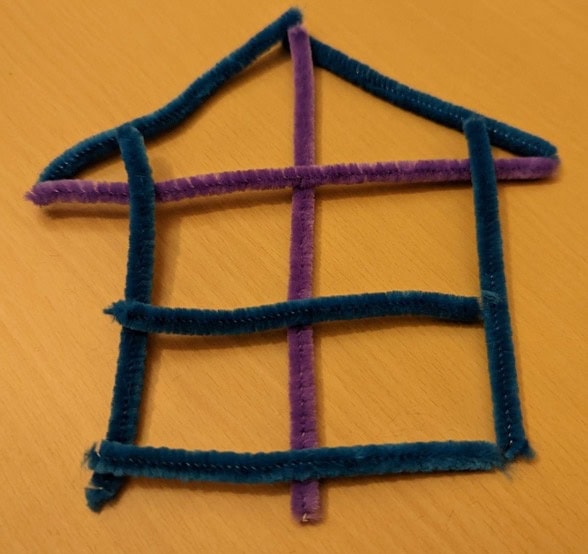
Place two 15 cm long chenille stems and six 10 cm long chenille stems on the table as shown in the diagram below.
Step 3

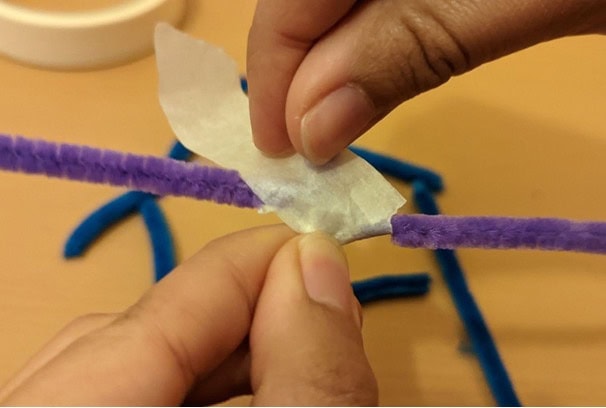
Tie all intersections in a cross pattern with masking tape. Too easy to tie the intersections with masking tape? Challenge yourselves by replacing masking tape with the more traditional materials of paper strips and glue.
Step 4

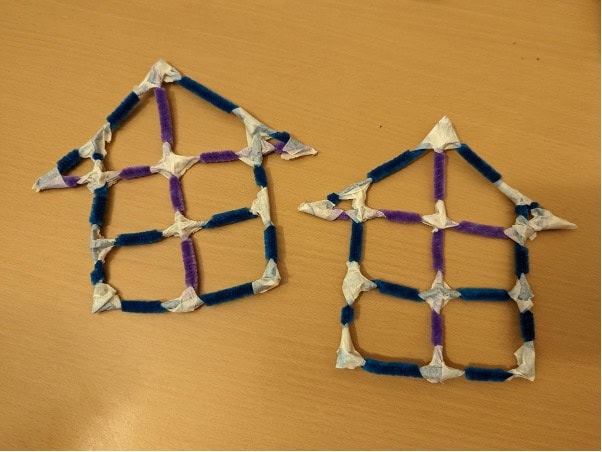
Repeat Step 3 to produce the back of the paper house.
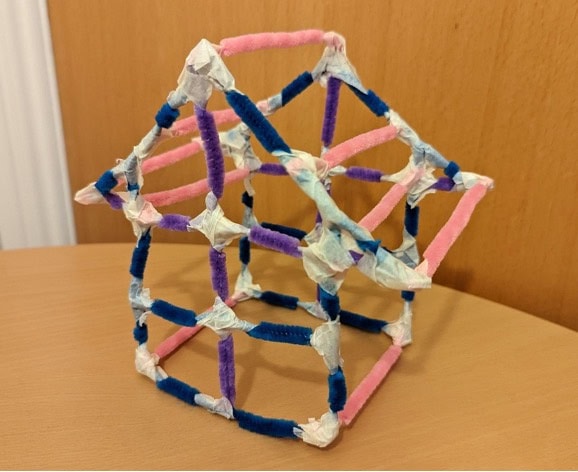
Step 5

Prepare at least nine chenille stems and masking tape to connect the front and back scaffolds, as shown in the diagram below. You could strengthen your scaffold by adding more chenille stems.
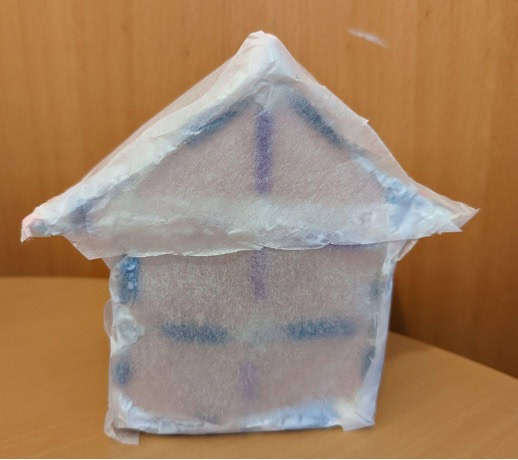
Step 6

Stick sheets of tissue paper with glue to construct the surface of the paper house.
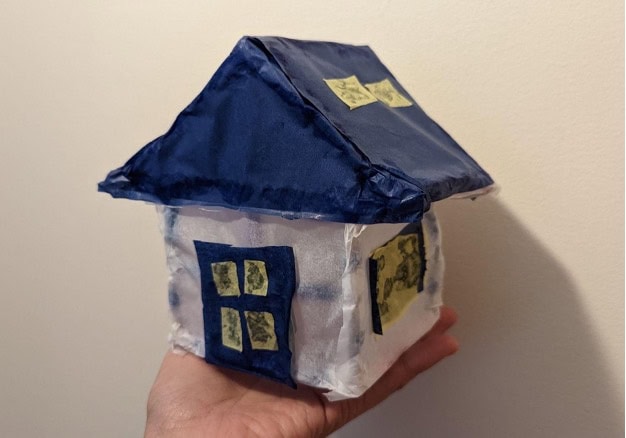
Step 7

To make the paper house more attractive, you could draw patterns or stick decorations on it.