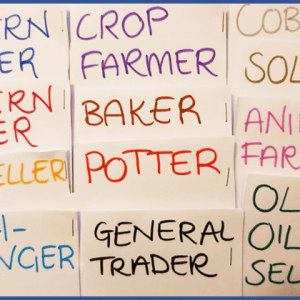
Bartering like it’s 400 BC

Coins were only introduced into Britain during the Iron Age (350 BC) from the Continent, prior to that it is likely that negotiation or bartering was used so people could get the resources or items they needed to live and work.

Soliders during the Roman period were partly paid in salt for example. This is where the word “salary” comes from – “sal dare” becoming “salarium”. Some more recent examples of this might include for instance rationing during the Second World War.

Step 1

Each participant takes a role (if there are more than 12 participants they can pair up and work together). The aim is to gain all of the resources they need by swapping what they have with other players.
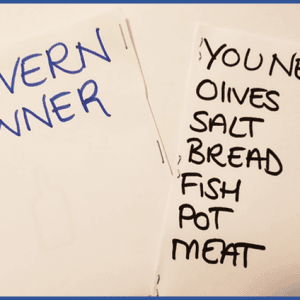
Step 2

Only one resource can be swapped with another at a time so one load of bread can be swapped for one pot (not one loaf of bread for two pots).

Step 3

Some participants may need to gain resources they don’t need, to trade with other participants which have resources they do need. e.g. a tavern owner may need olives but the crop farmer already has beer and so will not exchange. In this case, the tavern owner might need to trade beer with the baker to get a loaf of bread, which the crop farmer needs and will exchange to get olives.