‘Our Transcapes’ – YAC leader training and resource pack
August 2026
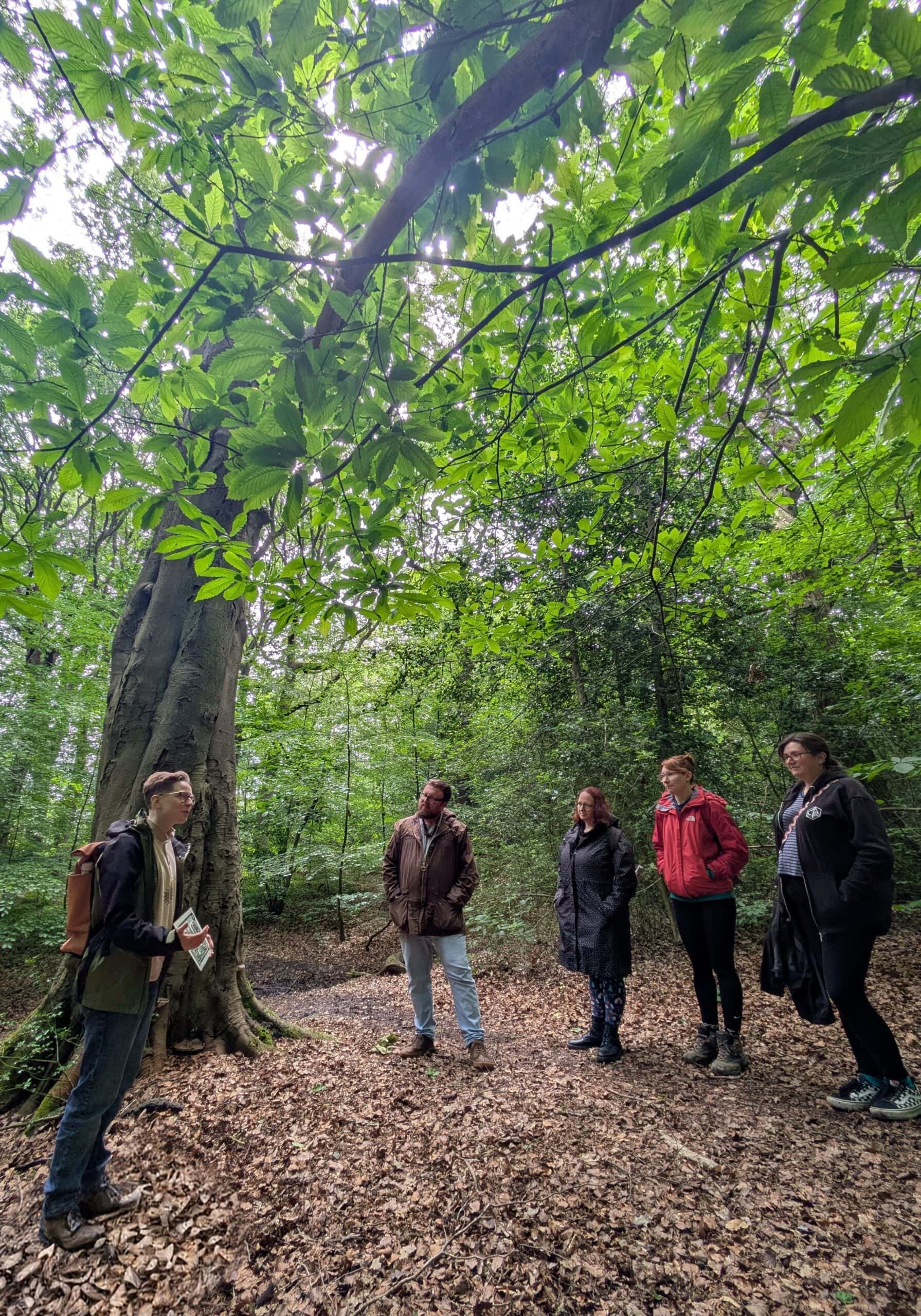
In June 2026 a cohort of YAC leaders headed to Ecclesall Woods just outside Sheffield for a fascinating and inspiring training day hosted by creative facilitator, researcher and poet S.K. Marley. The theme of the day was ‘Our Transcapes: queering British prehistory for transgender wellbeing’ and drew on S.K.’s recent work as an artist-in-residence for the Queer Natures project.
In this blog we share what we got up to on this training day and launch the fantastic new ‘Our Transcapes’ resource pack!
Today, popular and harmful mainstream media narratives purport that queerness – and especially transness – is new and unnatural. Can exploring evidence of prehistoric non-duality – a state of being that allows for fluidity and transformation – help show that transness is ancient and natural? Yes, yes it can!
For this training day a cohort of YAC leaders participated in a typical ‘Our Transcapes’ event, as developed by S.K. Marley for the Queer Natures project with the University of Exeter. Activities throughout the day used different storytelling methodologies developed by S.K for the project. We explored how queering British prehistory can create a more inclusive history for everyone, however they identify. As S.K. explains…
Queering the past isn’t about ‘proving’ trans or queer people existed ‘back then’. We have no idea what gender norms were in the Mesolithic, so how can we call anyone straight or queer/gay/transgender? Instead, it’s about questioning ourselves as archaeologists and how we present the past; trying to avoid or question the assumptions we might make.
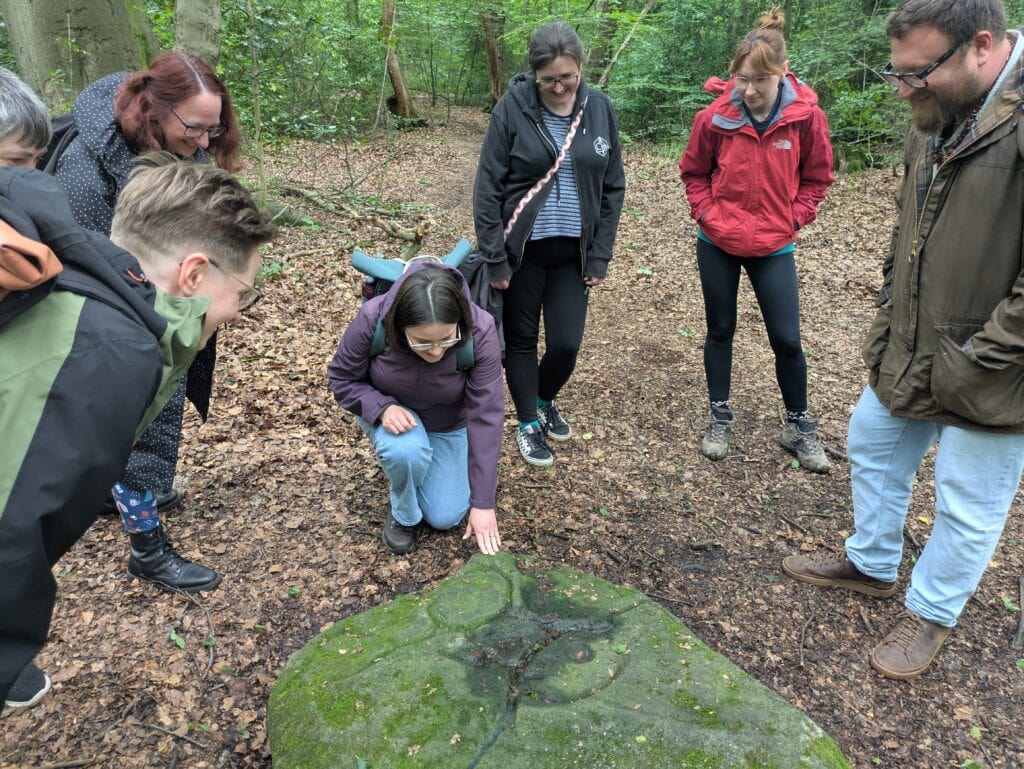
The day started with a gentle guided walk through Ecclesall Woods. This peaceful nature spot on the outskirts of Sheffield is rich in history from the Neolithic to the industrial age. However, our focus for the walk was using how landscapes and natural settings can provide a backdrop for exploring prehistory and the concept of non-duality. Whilst binary opposites such as male/female, human/animal, water/land and life/death are often used in archaeology, a non-dualistic approach acknowledges that people in the past might not have made these clear-cut distinctions.
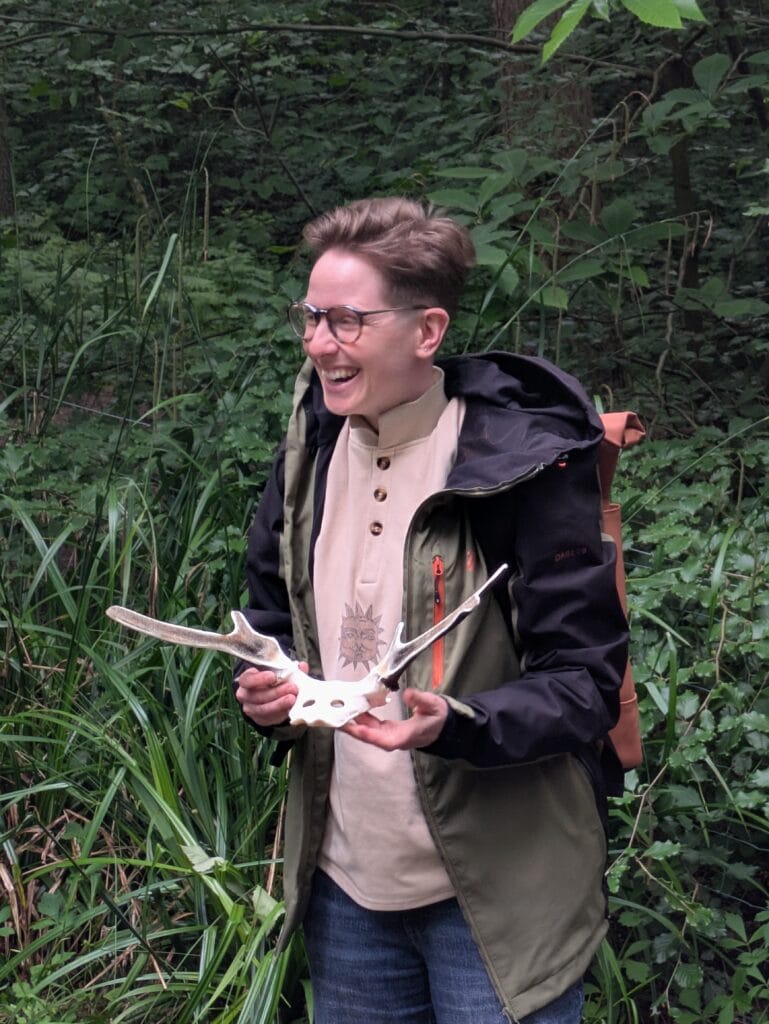
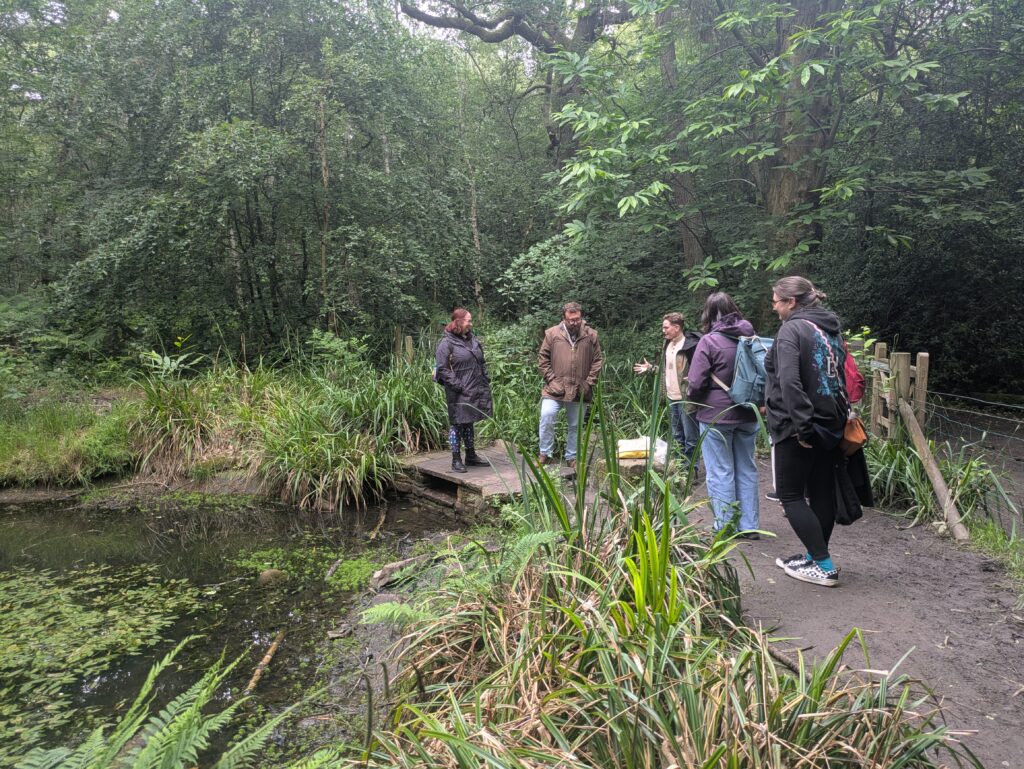
S.K.’s tour took us from a large woodland pond in which we discussed the relationships between people and nature as evidenced at the Mesolithic site of Star Carr, to wooded clearings where we considered how Neolithic people interacted with the landscape, finishing at a bridge across running water in the middle of the forest where we discussed the idea of boundaries and evidence for gender fluidity in the Bronze and Iron Ages. Throughout the walk S.K. shared some examples of prehistoric artefacts and sites that can help us think about non-duality in prehistoric Britain, such as the famous Iron Age ‘god dollies’ from East Yorkshire.
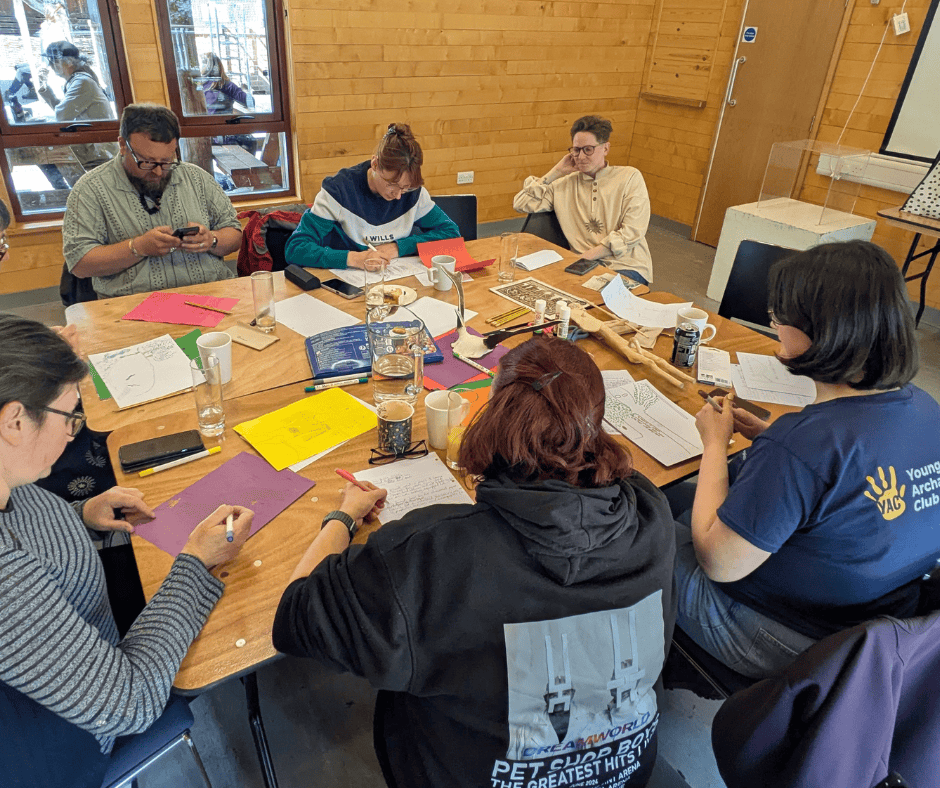
Back at the Woodland Discovery, S.K. led us through some creative reflection activities they had developed as part of the Queer Natures project. Designed with young people in mind and adaptable for a YAC session setting, activities incorporated imagination, drawing and creative writing to help explore difference and build empathy for people different to ourselves.
We had a go at creating our own ‘non-dual’ human-animal characters inspired by the famous antler headdresses discovered at Star Carr and then developed our characters further with a creative writing exercise to put ourselves in their shoes (or in some cases, hooves, paws or fins or tails!) and think about how people and animals interact with the natural environment. Finally, we reflected on what we had learnt about non-dual prehistories through some self-led creative responses, such as drawing and poetry.
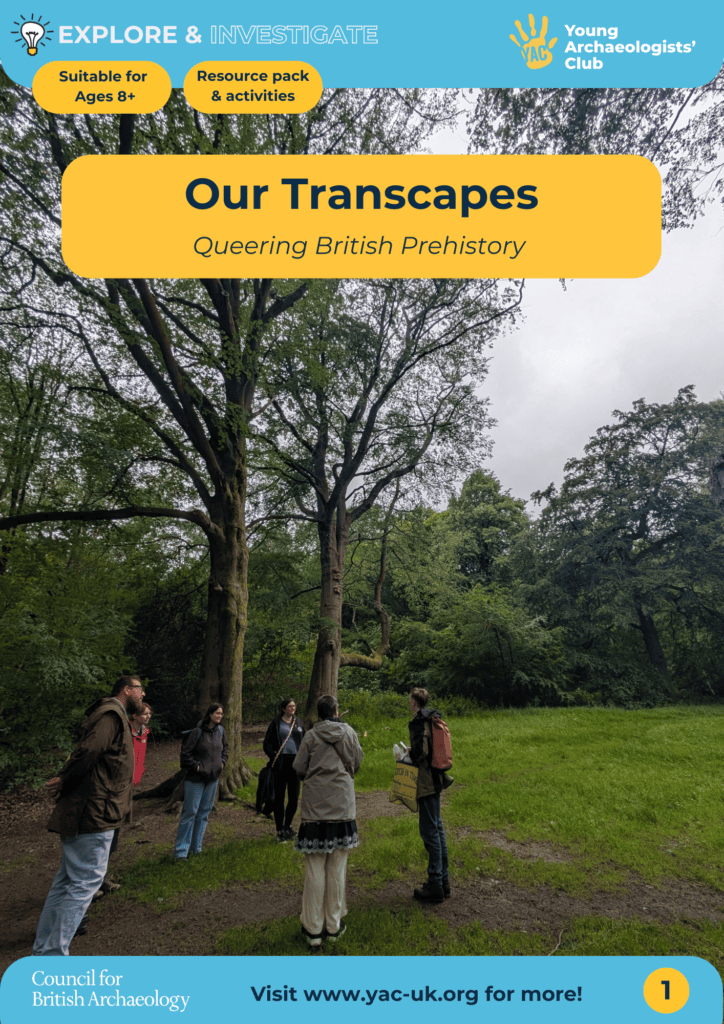
We’re delighted that S.K. has produced a fantastic resource pack to help YAC leaders explore prehistory through a queer lens and have a go at some of the activities we took part in on the training day. The resource pack includes:
- An introduction and glossary to help leaders understand what we mean by a ‘queer lens’ and why it’s important
- Some fact files on key artefacts that can help us explore this theme
- How-to guides for running a ‘Transcapes’ guided walk and creative activities.
Click here to download the resource pack!
The CBA is grateful to S.K. Marley for delivering this inspiring training day and preparing our new resource pack. Reflecting on the experience, S.K. told us:
“Getting to work with YAC leaders and the CBA Engagement team was such a lot of fun. It challenged me to present my research in a new way, gave me some valuable experience, and I learned from the participants, too. The Engagement team managed the organisation leading up to the event really well, and the day went smoothly as a result. I’d readily recommend collaborating with the team.”