Retelling Bevendean through community archaeology with Brighton YAC
June 2026
In this blog Brighton YAC branch leaders Gemma and Flick tell us about an exciting community archaeology project at Bevendean Farm in East Sussex. This blog accompanies Funding Lessons from the Farm Green Dig Project in which the team share some top tips on funding and delivering a community archaeology project.
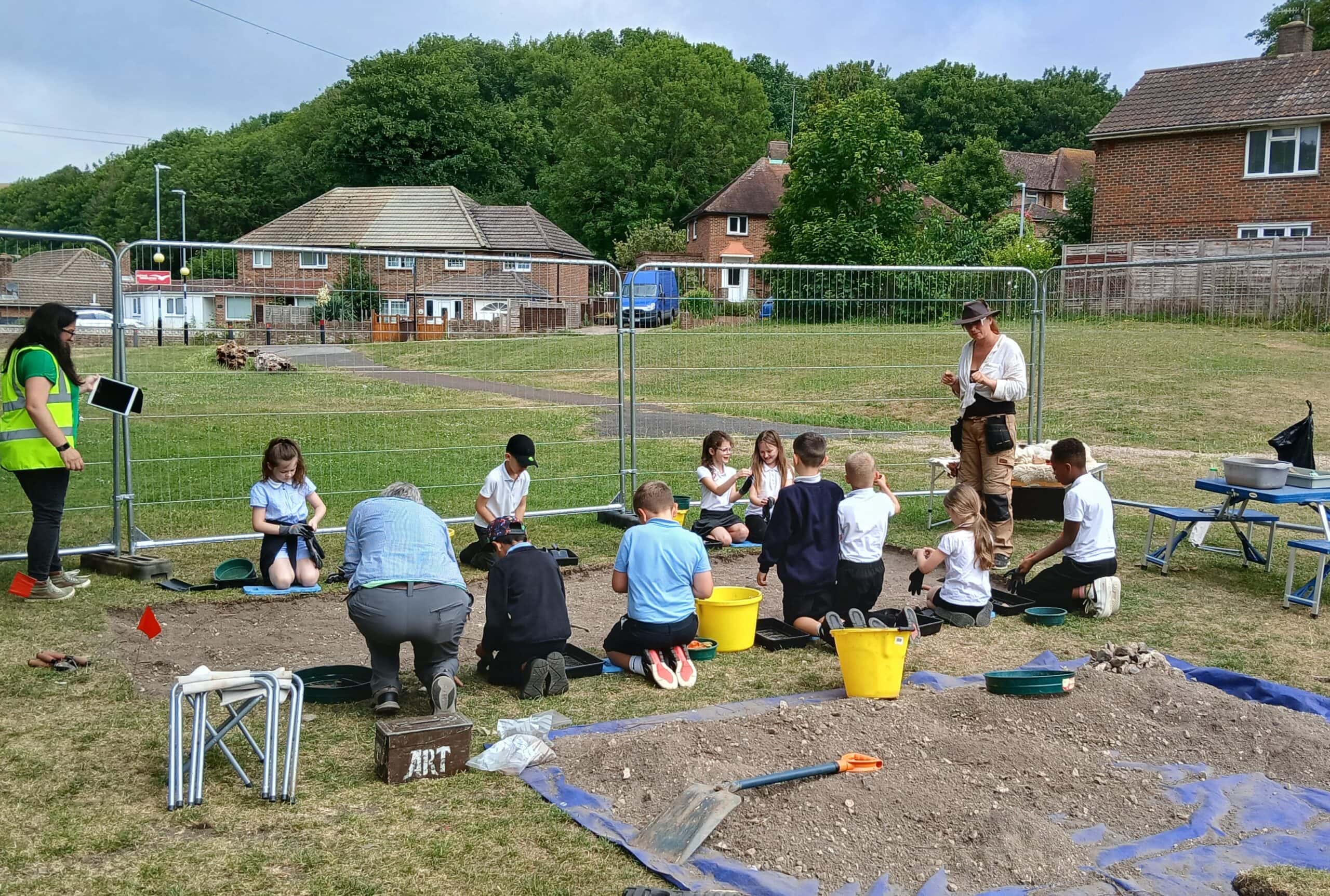
In summer 2025, we helped deliver the Farm Green Dig Project in Bevendean—an ambitious community archaeology initiative led by Brighton Young Archaeologists’ Club in partnership with local groups, residents, and heritage organisations.
The project was made possible through the Changing Chalk Community Grants Scheme, funded by the National Lottery Heritage Fund, and supported by a wide network of partners including the Bevendean History Group and Brighton & Hove Archaeological Society, among many others.
At its heart, the project set out to do something simple: put local people at the centre of uncovering and telling their own history.
A hidden farm beneath a neighbourhood park
The project explored a medieval and post-medieval farm complex buried beneath a modern community green space in East Brighton. What appears today as open parkland once held buildings, working yards, and lived experiences that had largely slipped from public memory.
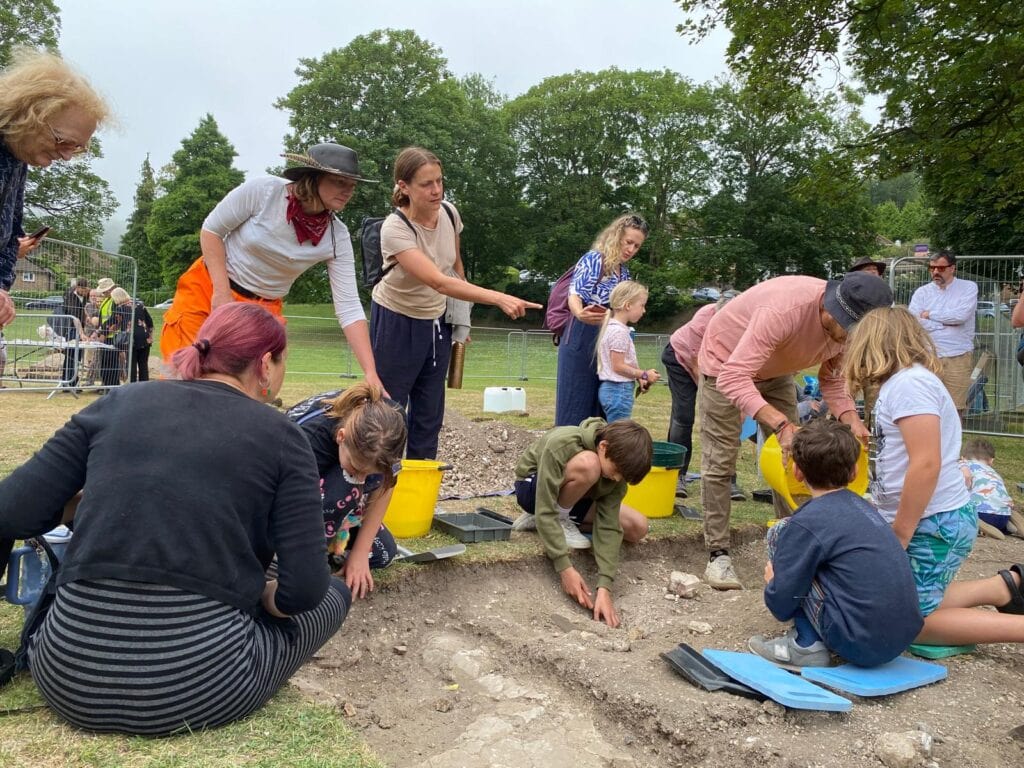
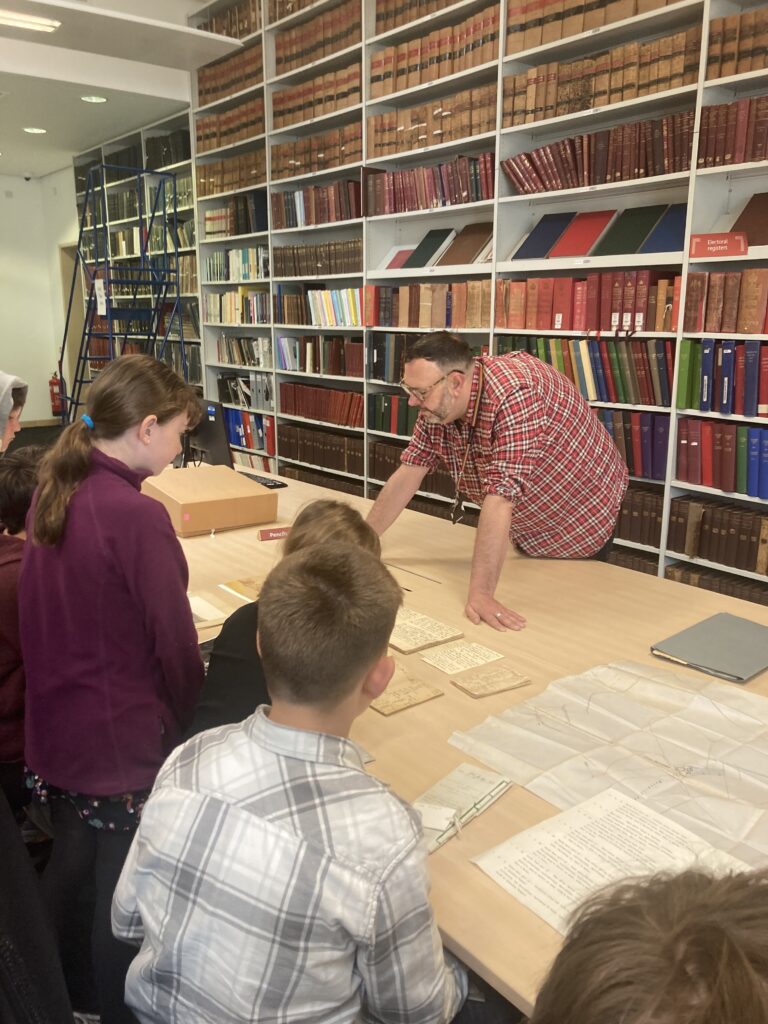
Over a week of excavation, participants worked together to investigate the site—recovering over 8,000 finds, identifying structures, and linking archaeological evidence with local oral histories.
But the real story of Farm Green isn’t just about what we found—it’s about who was part of the process.
A genuinely community-led dig
From the outset, this was a fully participatory project, designed to be inclusive, accessible, and co-created.
Over 700 people aged 3 to 93 took part, with young people playing a central role in everything from planning and excavation to interpretation and storytelling.
Families, schools, volunteers, and archaeologists worked side by side. For many, it was their first experience of archaeology.
That diversity of voices is what made the project so meaningful. It wasn’t about delivering archaeology to a community—it was about creating it with them.
More than archaeology
While excavation formed the backbone of the project, its impact reached far beyond the trenches.
Participants reported increased confidence, new skills, and a stronger connection to their local heritage.
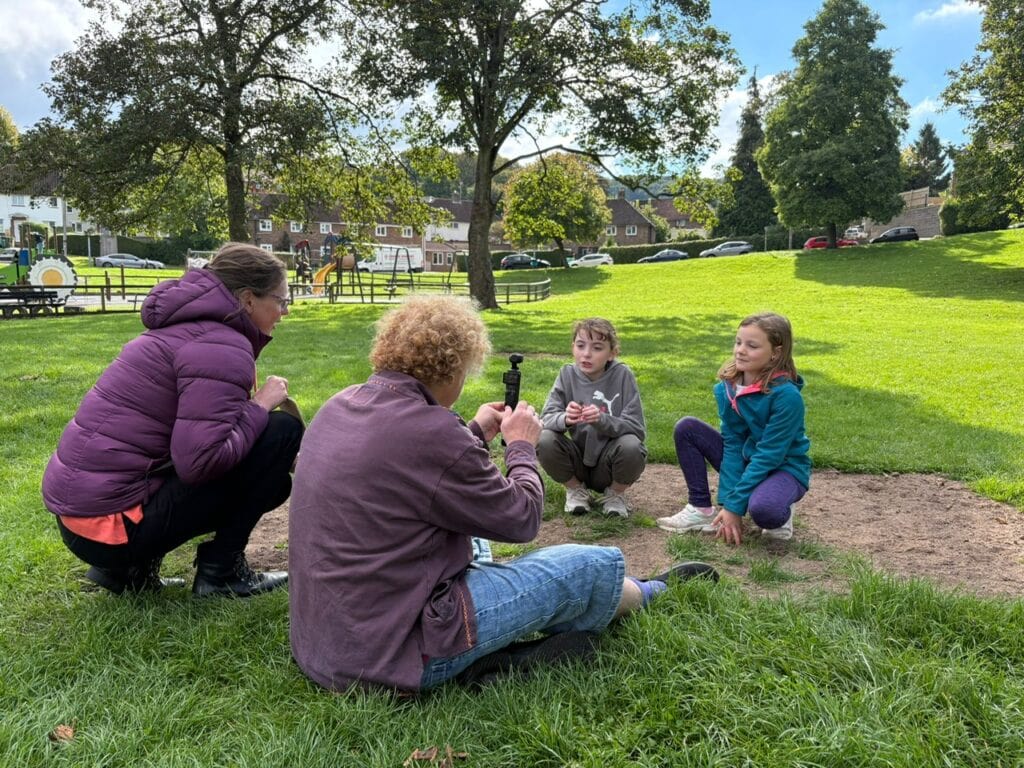
The project also created space for intergenerational storytelling, bringing together lived memories and new discoveries in a shared exploration of place.
Sharing the story
A key aim was to ensure the project lived on beyond the dig itself.
Together, participants created:
- a youth-led interactive digital guide
- a public open day celebrating the site and community
- a short documentary film, capturing the voices, memories, and experiences of those involved
🎥 Watch the Farm Green project film:
These outputs mean the story of Farm Green continues to reach new audiences—and that the voices of the community remain central to its legacy.
Why it matters
Farm Green showed how archaeology can be a catalyst for something much bigger.
It demonstrated that:
- heritage can be co-created, not just interpreted
- young people can lead meaningful research and storytelling
- and local spaces can hold deep, powerful histories waiting to be rediscovered
Above all, it reinforced a simple idea:
archaeology isn’t just about the past—it’s about people.