Pause for Paws: Exploring Ancient Bonds with Pets
July 2025
CBA Youth Panel member Ihini Aambreen writes…
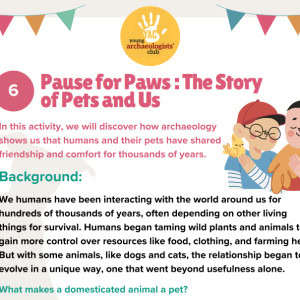
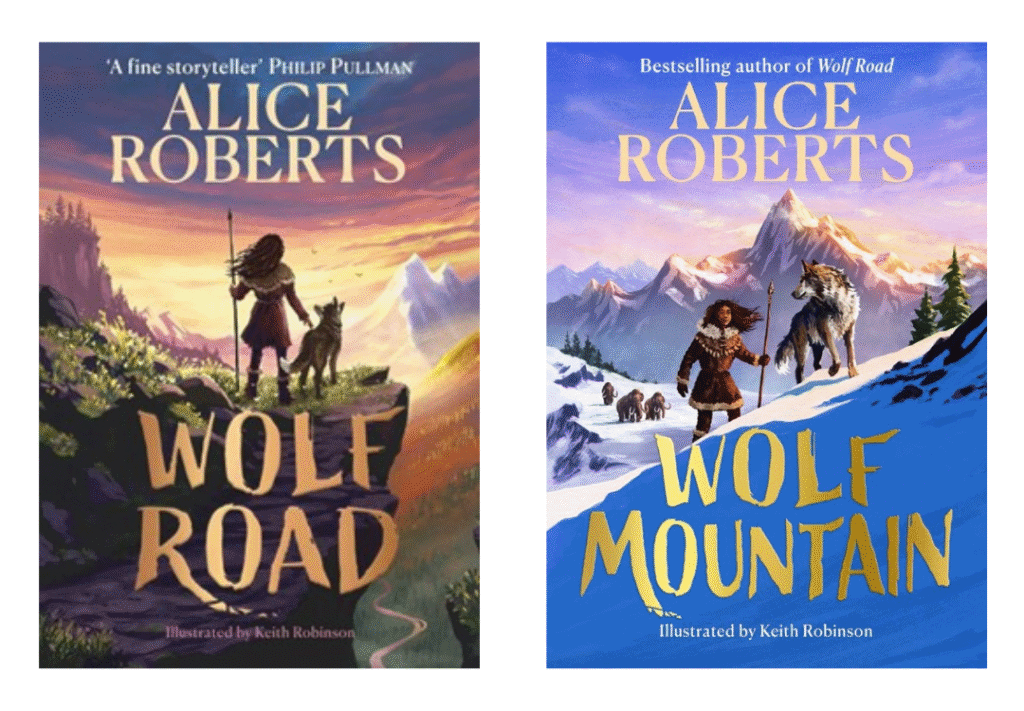
Imagine a young prehistoric girl with a taste for exploration, traversing through ancient caves and dense forests, setting up camp, hunting for food and sheltering from the cold together with her tribe. What better companion than a loyal, four-legged furry friend to help her feel safe, happy, and less alone? This image was inspired by Tuuli, the young hero in Wolf Road by Alice Roberts, a story that brings the prehistoric world to life through the eyes of a child.
When I read Tuuli’s story last year, it made me wonder about the emotional aspects of human-animal bonds in the past. Would tamed animals have offered wellbeing, comfort and companionship to people long ago, even if they did not call them pets? This year’s Festival theme – Wellbeing and Archaeology – brought these thoughts back to my mind and I wanted to create a fun, imaginative activity where we get to travel back in time together, explore stories of how animals have shaped our lives, and reflect on what they mean to us today.
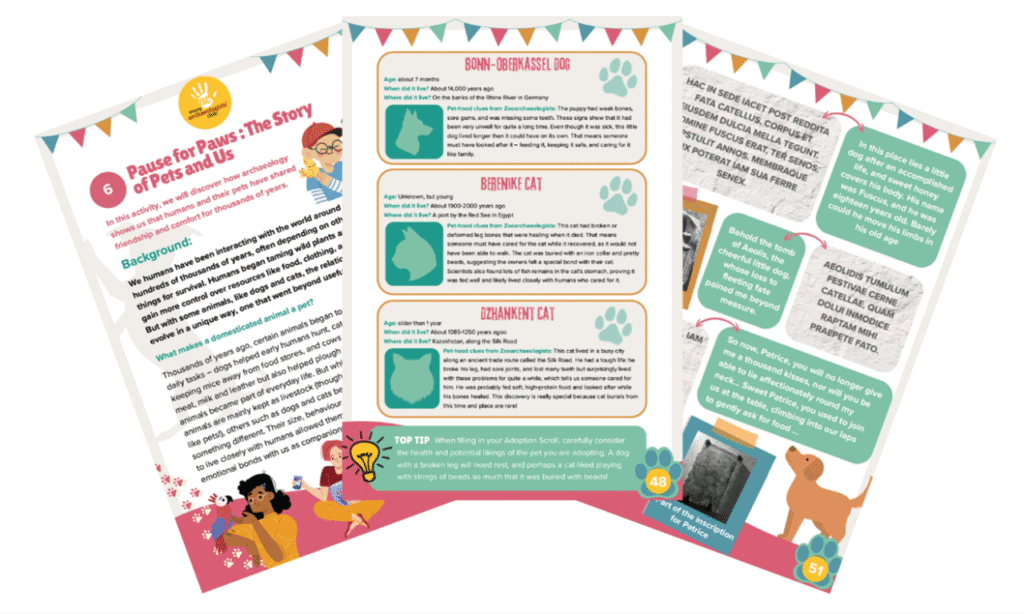
The activity I created is called Pause for Paws and it can be downloaded here! With a brief introduction to the history of animal domestication and modern perspecives on how pets support our wellbeing, the activity is split into two parts. For ‘Adopt a Pet from the Past’ I used real archaeological case studies to create profiles of three ancient pets – ranging from Mesolithic Germany, and Roman Egypt, to Silk Roads in Kazakhstan. I also utilised this chance to mention zooarchaeologists – specialists who focus on the analyses of animal remains from archaeological contexts – to spark curiosity about one of many career paths and specialisms within archaeology. It encourages the reader to adopt one of these ancient animals and reflect on the time they shall spend together.
The second part of the activity focuses on a creative writing task, using examples of Latin epitaphs written in memory of beloved pet dogs. By including excerpts from these original inscriptions, I hoped to highlight how deeply people in the past cared for their pets, in ways that feel remarkably familiar today. It prompts the reader to think not only about how a pet animal makes them feel, but also about what the animal might feel in return – this personification aims to build empathy and a deeper sense of connection.
Contributing to the Festival of Archaeology Resources as a young person made me think carefully about how to engage youth of different ages in a way that respects their intelligence, while encouraging them to explore their own reflective and creative thinking skills. Although it was challenging to simplify complex ideas for younger audiences without losing important details, and to find diverse examples from around the world, creating this activity was incredibly rewarding and I learnt a lot along the way too!
I hope this activity encourages young people to explore our place in the natural world and our connection to it, through the lens of archaeology, while also nurturing feelings of empathy, curiosity and imagination. So, whether you are an animal lover, a future archaeologist, or simply seeking a moment of calm, I hope Pause for Paws helps you feel the timeless bond between humans and our animal companions, through the ages and around the world!