Recognising and Responding to Abuse
Key Principles:
- Recognise that abuse does happen and be aware of the signs to look out for. Abuse can occur online, in the physical environment or in a combination of both settings.
- If you have a wellbeing or safeguarding concern about a child or adult who is part of any CBA activity, you must never keep this to yourself. It may seem minor, and you may not be sure that it needs reporting, but it is better to react early on to any concerns.
- Designated Safeguarding Leads are the people to whom all concerns about child or adult protection, allegations or concerns about staff or volunteers should be reported to. They have responsibility to manage these issues, to seek advice and to liaise with statutory authorities. See section How to Report Suspected Abuse for more information about the DSL role.
- The CBA also has a Trustee Safeguarding Champion who is responsible for the strategic oversight of all safeguarding matters. The Trustee Safeguarding Champion is someone to talk with if you have concerns about the safeguarding culture, the way that safeguarding is managed or concerns which relate to either of the DSLs.
- Group leaders are also people to whom you can talk about any safeguarding or wellbeing concern. Please do not share your concerns with friends or family.
- You may be concerned about breaching someone’s privacy or confidentiality. Extended confidentiality enables you to be able to talk to the DSL without this being a legal breach of someone’s confidentiality.
- Any concerns about safeguarding or wellbeing should be discussed with a DSL within 24 hours
This section tells you how to respond to a concern you or others may have for a child or adult at risk.
If you are concerned that someone is in immediate danger of harm
- Please call the police.
- If a child or adult needs emergency medical attention, call an ambulance. You, or the co-leader or helper, should contact the child’s parents or adult’s next of kin.
Concerns about the safeguarding and wellbeing of children or adults
Ways this may present;
- A child or adult taking part in a CBA activity may tell you about something directly.
- A parent, guardian or carer may tell you about something directly.
- You may witness behaviour relating to wellbeing or safeguarding which concerns you.
- A member of staff or volunteer may tell you about something directly relating to safeguarding or wellbeing which concerns them.
How to respond:
- Listen.
- Reassure them that they have done the right thing by talking with you.
- Do not try to investigate by asking questions. Your role is to be the alerter, not the investigator.
- Explain that you will need to share, with whom and why.
- Make a record using the Incident Reporting Form.
- Talk with a DSL who will consider if a referral needs to be made to the local social care team and or the police.
Concerns about the behaviour of a member of staff or a volunteer
Ways this may present;
- You may witness someone behaving in an unsuitable way with children or adults, harming a child or committing a criminal offence.
- A child, parent or adult attending a CBA activity may tell you about the behaviour of an adult which concerns you.
- A member of staff or volunteer may tell you that they are being investigated by their employee, social care or the police for behaving in a way which may have harmed a child or adult.
- There may be information on their criminal records check.
How to respond:
- Listen.
- If someone shares information with you, reassure them that they have done the right thing.
- Do not try to investigate by asking questions. Your role is to be the alerter, not the investigator.
- Explain that you will need to share, with whom and why.
- Make a record using the Incident Reporting Form.
- Talk with the DSL who will consider any immediate safeguarding actions and will liaise with the Local Authority Designated Officer.
If you have any concerns which relate to the person that you should be reporting safeguarding concerns to, please speak with the person above them. For example, if you are a volunteer with the YAC and have concerns about a branch leader, speak to the DSL. If your concern relates to one of the DSLs, please speak to the other DSL or the safeguarding trustee champion. Please see refer to Section 5. for detailed information on whistleblowing and escalation.
YAC HQ will take the lead on any allegation, will give you guidance, and will keep you informed as much as they are able. Our first priority is always the safety and welfare of children. However, a person who is the subject of an allegation has the right to be treated in a fair, sensitive and non-judgemental manner and to have their privacy respected as far as this ensures the safety of children. Therefore, information about any allegation or concern must only be shared on a need to know basis.
Concerns about the behaviour of a group member
Ways this may present;
- You may witness a member of the group behaving in an unsuitable way towards another member, e.g. bullying or discriminatory behaviour.
- A member of the group may tell you about the behaviour of a member of the group.
- A parent/guardian of a member of the group may talk to you about their concerns.
How to respond:
- Listen.
- If someone shares information with you, reassure them that they have done the right thing.
- Do not try to investigate by asking questions. Your role is to be the alerter not the investigator.
- Explain that you will need to share, with whom and why.
- Make a record using the Incident Reporting Form.
- Talk with the person and, if they are a child, their parent or guardian, to try to find out what they want to happen but do not make promises you cannot keep.
- If you have safeguarding or wellbeing concerns, talk with the DSL who will consider any immediate safeguarding actions and will liaise with the Local Authority Designated Officer.
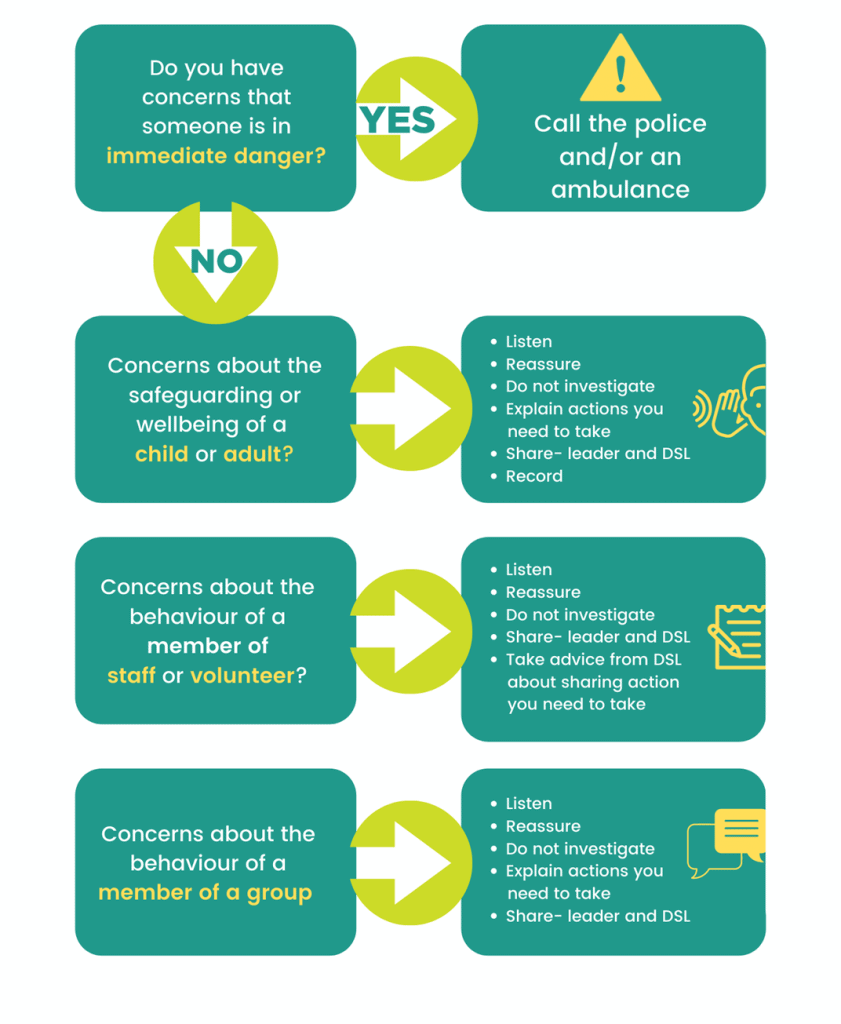
This flowchart is a visual representation of the guidance above:
This guidance is taken from the CBA’s Safeguarding Policy: Child and Adults at Risk
If you would like further information, contact YAC HQ on yac@yac-uk.org