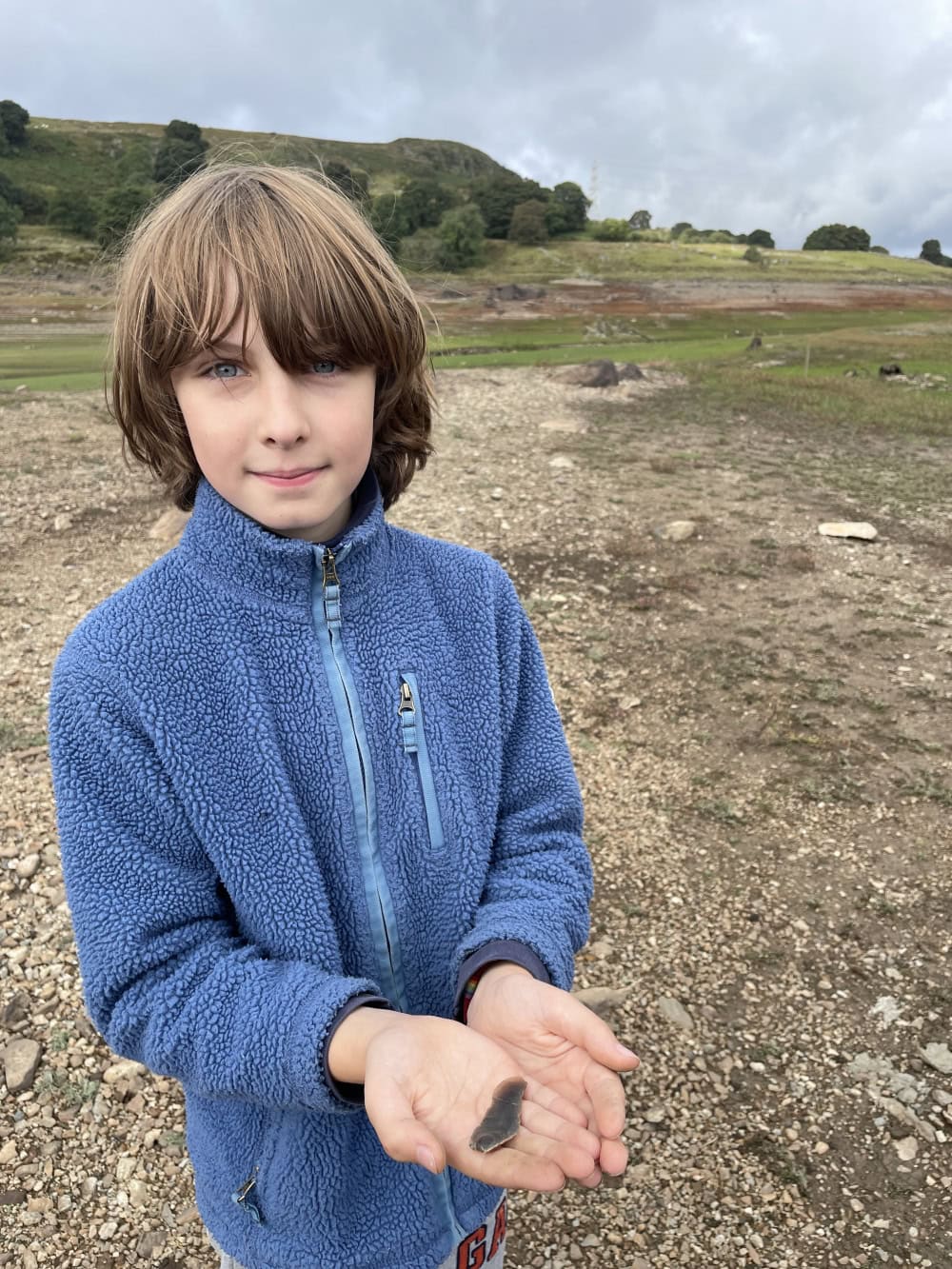
Wales Online YAC Member Finds Mesolithic Flint Knife!
During the dry summer of 2022, 11-year-old Elfyn Wyn, a member of Wales Online Young Archaeologists’ Club (YAC), visited a flooded village and found evidence of Wales’ prehistoric past.
Elfyn Wyn's trip to Capel Celyn
On the summit of a large mound, resting on natural rock, Elfyn found a knapped flint blade and knew, as a Young Archaeologists’ Club member, that flint isn’t to be found naturally in Wales. He knew it would have had to have been carried there by human hands long ago.

In 2023, Elfyn contacted archaeologist and Radio Cymru presenter Rhys Mwyn, who immediately recognised the flint as a small blade from the Neolithic or even the Mesolithic.
Mesolithic finds across North Wales suggest a population that followed water routes, particularly along the Dee Valley. Branching along the Tryweryn into the uplands would have presented many opportunities.
Flint, carried by our Neolithic and Mesolithic ancestors, was often in the form of projectile points and scrapers. Flint knives, however, are particularly special as they were used in daily life to cut up meat and other foodstuffs and also to prepare animal skins for use as leather and cord.
During the Mesolithic, the climate in Wales became warmer and wetter than it is today. This led to changes in the vegetation of Wales with the development of a wooded landscape inhabited by Mesolithic hunter-gatherers. The diet included fish, wild boar and other animals such as elk, red deer, roe deer and aurochs (wild cattle).
Even with future droughts, the hope of finding ancient postholes and evidence of dwellings might have alluded archaeologists forever, with much of Capel Celyn’s topsoil compromised or washed away.
Flint artefacts are found from time to time across Wales. However, there are no registered finds from the flooded Tryweryn valley floor on the National Museum of Wales’ ‘Portable Antiquities Scheme’.