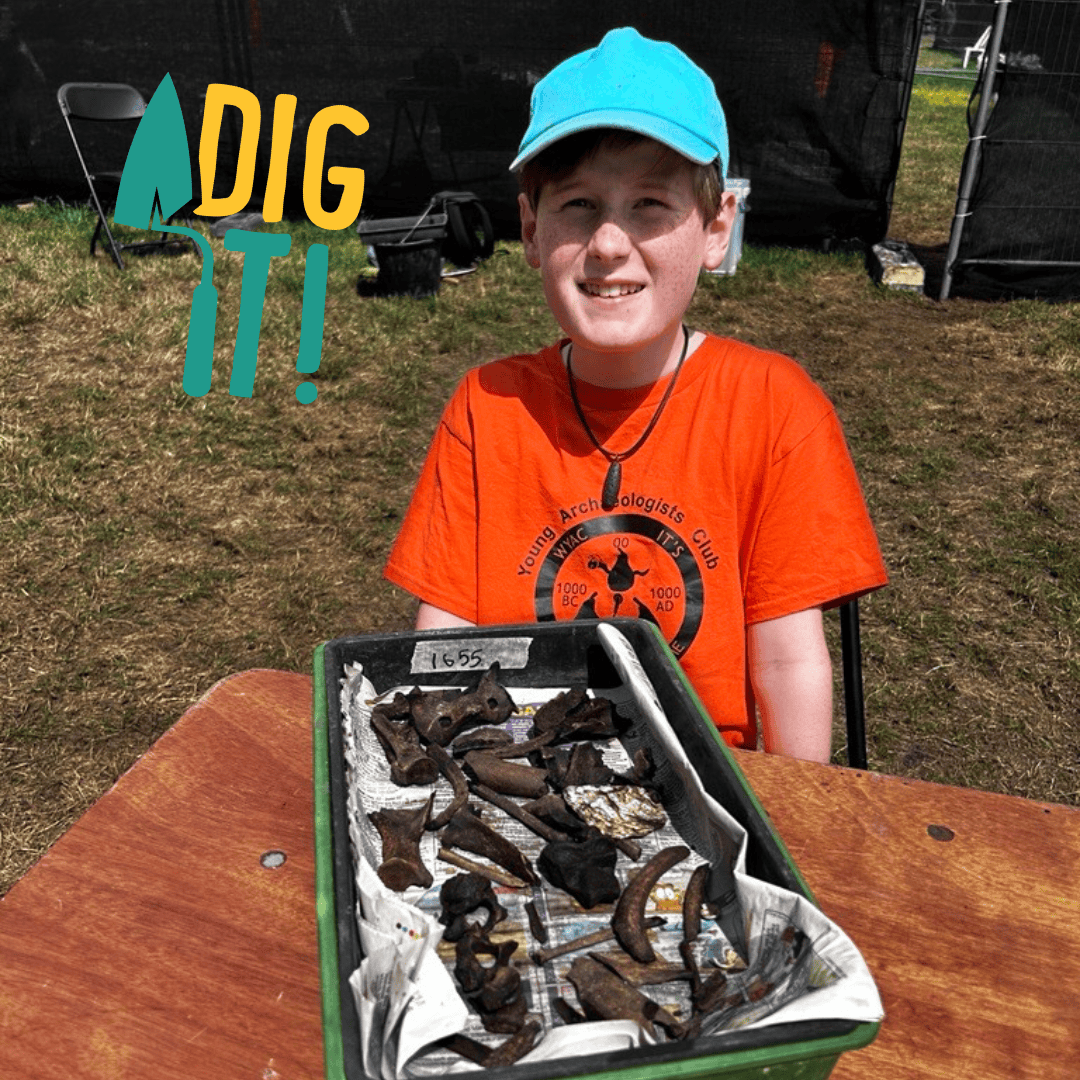
Dig Diaries 2025 – Cookham Anglo-Saxon Monastery
This summer, members of the YAC have been joining excavations across the UK as part of our annual Dig It! competition. Here we find out all about the dig day with the University of Reading excavating the site of an Anglo-Saxon monastery in the village of Cookham in Berkshire.
On 1st August three lucky young archaeologists had the exciting opportunity to join in with the project. Read on to hear what Dylan from Worcestershire YAC got up on to the day…
Read on to hear what Dylan from Worcestershire YAC got up on to the day…
I was really excited to find out that I would be able to take part in the Cookham Abbey dig that the University of Reading run. I had been a couple of years before and was excited to see the progress they had made in the two trenches and was particularly excited to see the cemetery trench again.
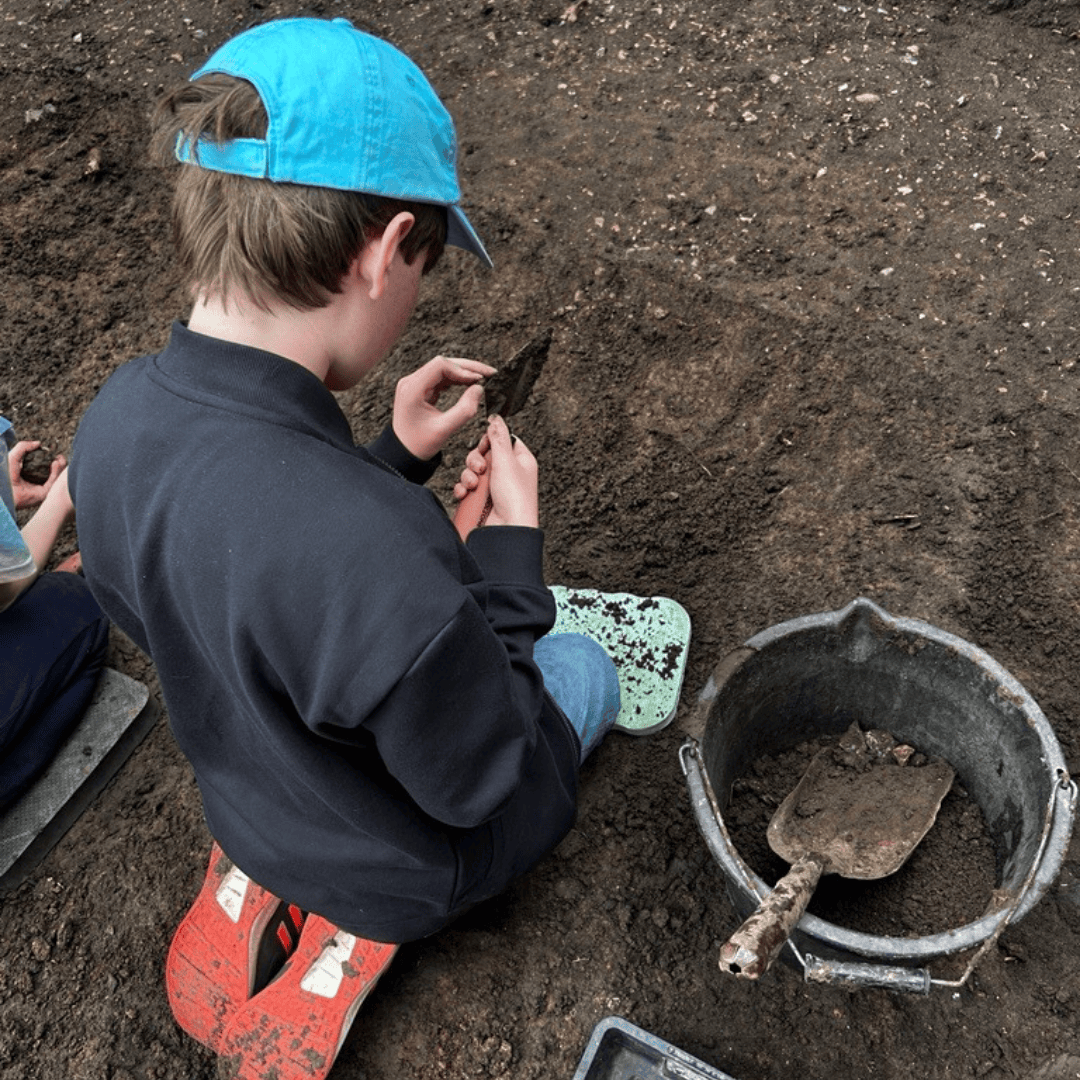
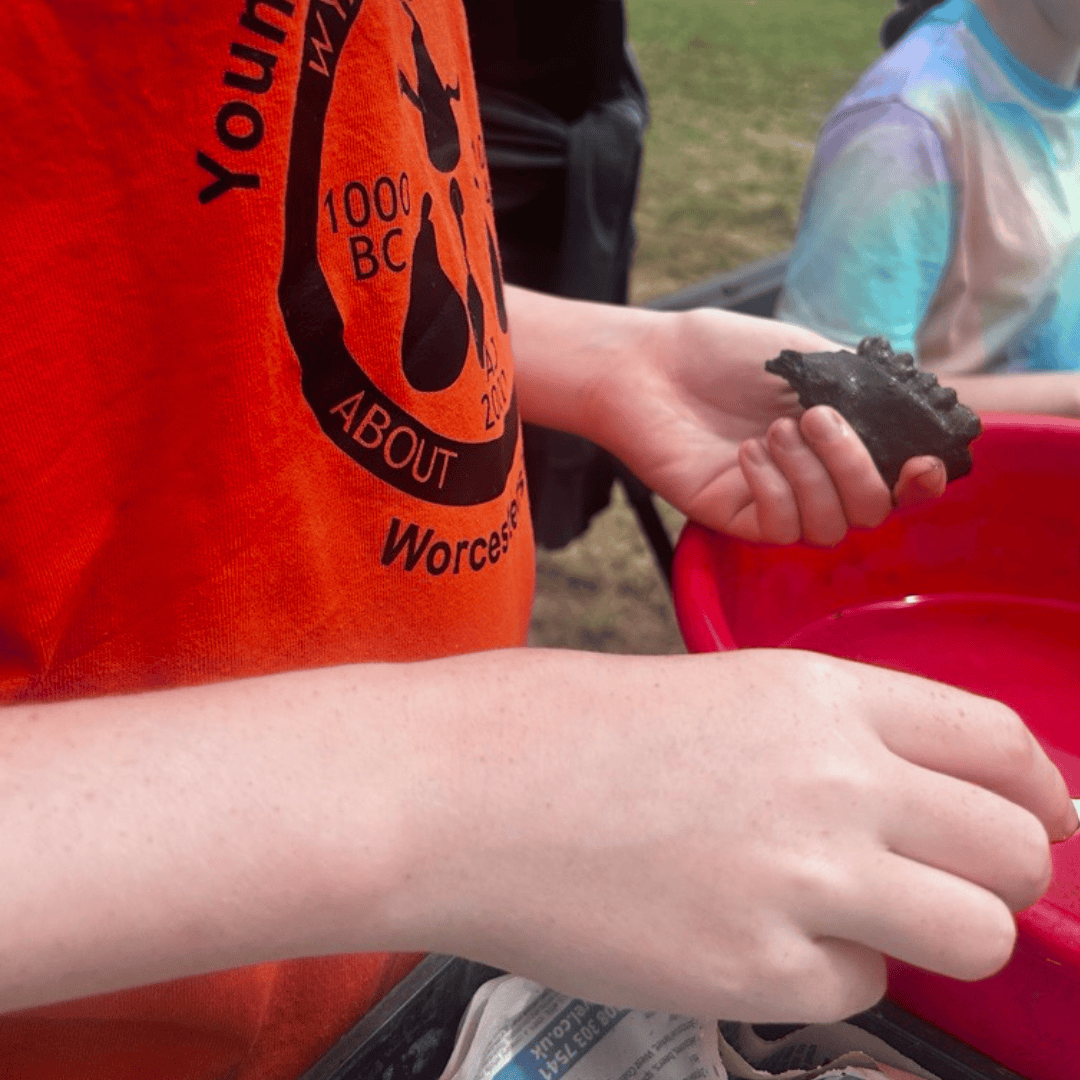
When we first arrived, we were cleaning an area up in trench one with our trowels. This activity is something that I have done on previous digs which involves scrapping the top layer of dirt slowly off and revealing any items of interest that might identify how the land was used in the past. It was explained that Trench 1 at Cookham Abbey featured living quarters with various buildings indicated by lines of post holes, a well and a leat where a water wheel would likely have been and lots of rubbish dumps! As a result, a lot of the finds in this area are animal bones and other remains of food items. Previously, I have found an oyster shell and this year, I found a couple of snail shells and some animal bones in this area of the site. There is also lots of flint of course! Some of the students were digging deep into a well structure and others were focusing on excavating more of the leat, trying to develop a bigger picture of what was going on in this part of the site before the dig closed for another summer.
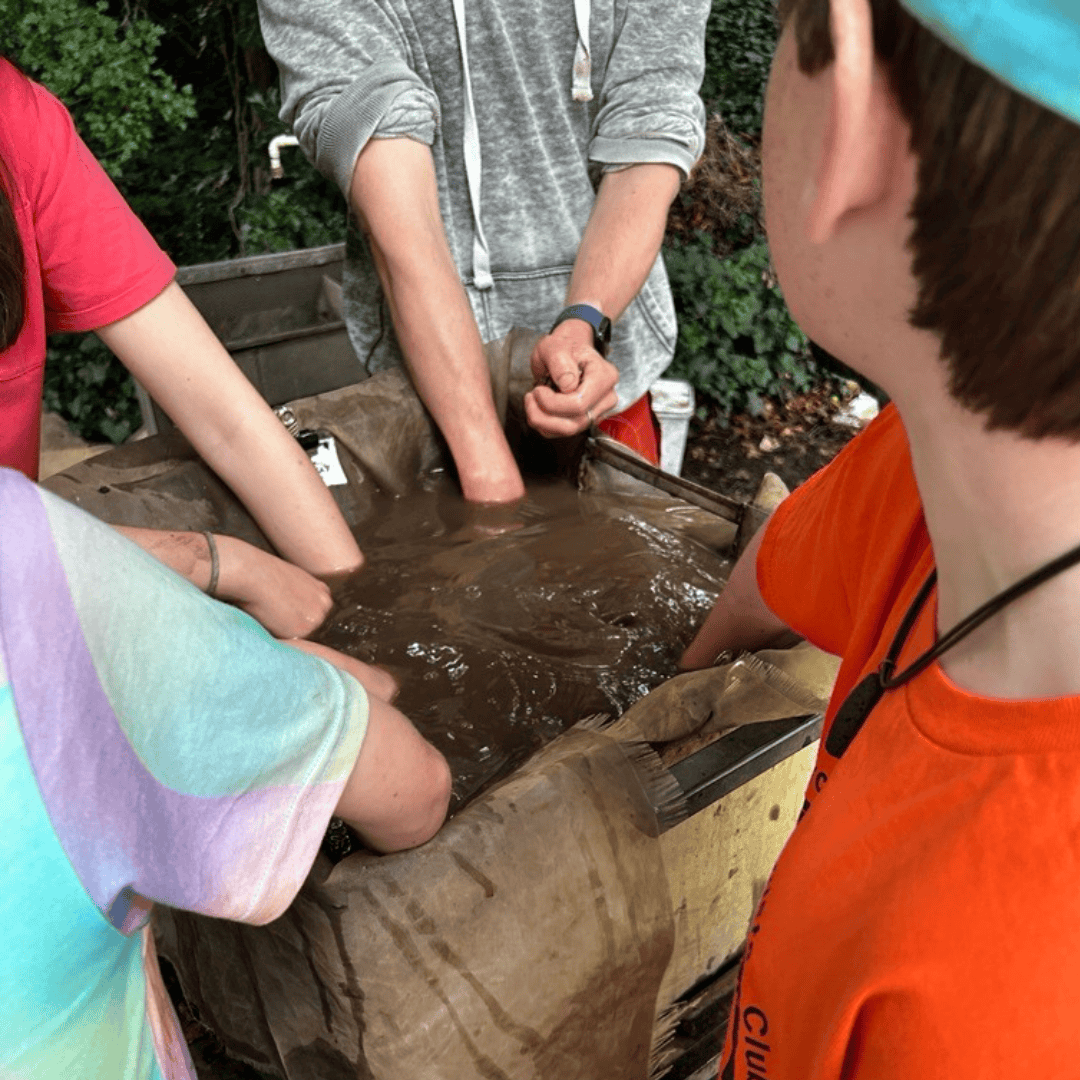
After being in Trench 1, we headed over to the floatation tanks. I had never done floatation before, and it was really fun! The idea is to take pre-sorted soil and sift this using very fine mesh to separate out the other materials from the silt with larger and smaller particles being further separated out. It was really important for us to make sure that we kept the thin gauze material attached to the tank edges so as to make sure it was sifting efficiently.
Saving the best till last, we were able to work in the cemetery trench. It fascinating seeing how people in the past utilised the space to bury the dead. Its interesting to see the way that some of the skeletons had been pushed into different positions as more people at later times were needing to be buried and the process that archaeologists go through to think why this might have been done. As part of the work in this trench, I was excavating a large (likely adult male) femur bone that was complete. Around this bone, I excavated the remains of a pelvis but then was able to lift the full femur from its resting place. I had to be really careful to ensure the fragile find didn’t break as I lifted it.
I thoroughly enjoyed the day, the company of the other competition winners and the University of Reading students and tutors as well as the opportunities that we were given! Thank you YAC!
This year’s Dig It! bursary was made possible by the kind generoity of the Marsh Charitable Trust. These £80 bursaries were created to help cover the costs of travel, accomodation and/or subsistence for each winner. We are also grateful to Past Horizens for providing our Dig It! winners with havisacks full of archaeological tools to use on the day of their digs.
