Dig Diaries 2025 – Ancrum Mantle Walls
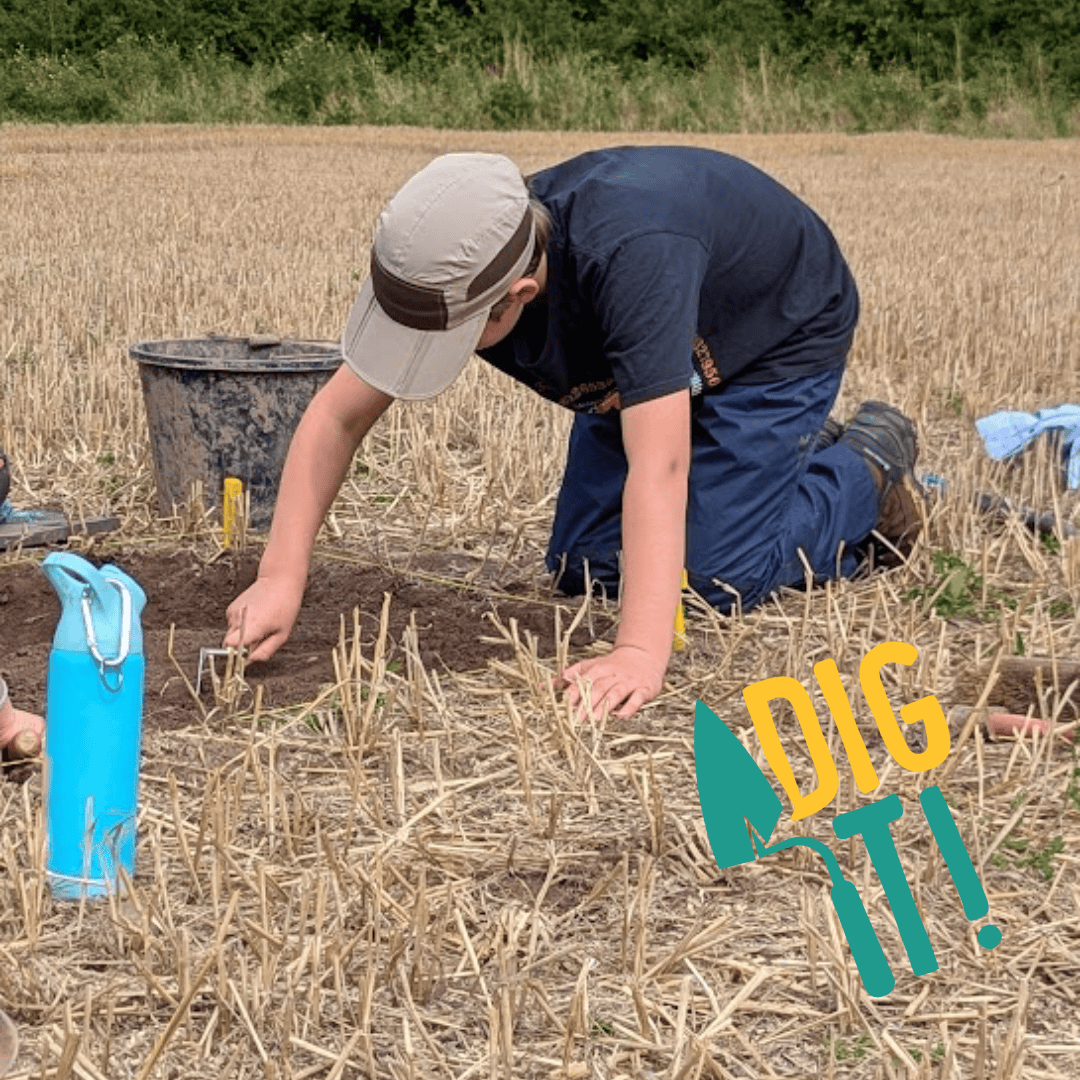
This summer, members of the YAC have been joining excavations across the UK as part of our annual Dig It! competition. In our final Dig Diaries blog of 2025 we find out all about the dig day with HARP excavating Ancrum Mantle Walls in the Scottish Borders.
On 6th September three lucky young archaeologists had the exciting opportunity to join in with the project. Read on to hear what Lukas and Jennie got up on to the day…
First, Lukas from from The Sill YAC tell us…
It was brilliant to win the Dig It competition and go to Ancrum Mantle Walls. First, we learnt a lot about the history of the place where the dig was happening. It used to be owned by the Bishops of Glasgow and there was a huge palace in what is now a farmer’s field. The farmer had uncovered some massive stones that used to make up part of the palace with his plough, and then there was a big dig there in 2019 when the archaeologists found a lot more.
We got to see lots of things they had found in 2019 and more recently, and then had a go at digging ourselves in a new trench. It was hard work! The ground was really firm and we made quite slow progress until Michelle, who was leading our group, got a pickaxe out to break up some of the earth. Michelle told us about all of the recording they have to do, to make sure they know where everything is, so they can put it back later. And then we got to watch as they made some LIDAR images of the trench, to record exactly how everything looked in 3D.
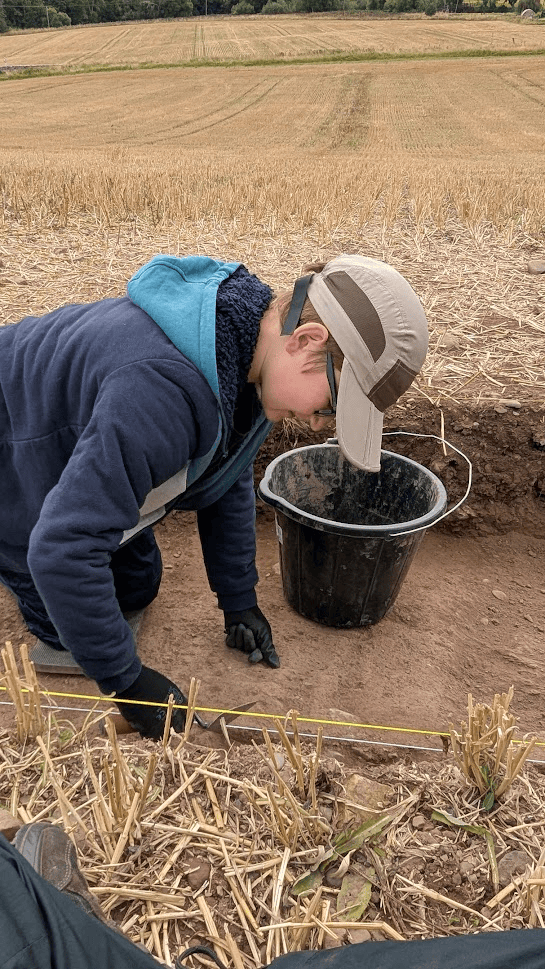
After that we did some field-walking, which was my favourite bit. It was really cool to see lots of stuff on the ground that you wouldn’t normally notice – not just artefacts like pottery and bones, but also frogs and insects. We also got to look in some of the test pits that had been dug on lower ground, and see how the earth was made up of different layers as you go down.
I didn’t find any artefacts, which was a shame, but I still really enjoyed the day. Thank you so much to everyone who helped and showed us around the site!
Next, Jennie from The Sill YAC shares her experiences…
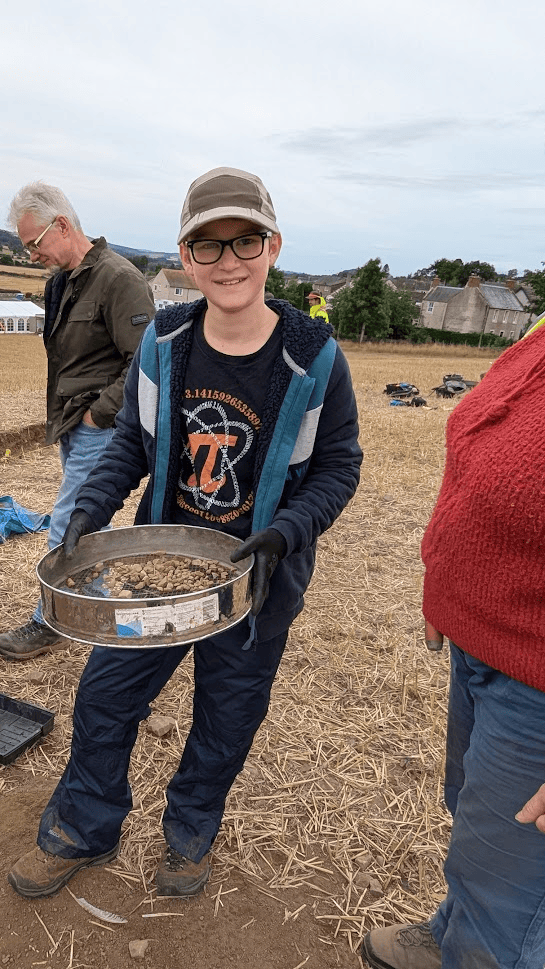
In the morning, we met the team. Everyone was very friendly and loved talking to us about the dig! We got shown some of the artefacts that had been found and then got shown around the site, which was made up of one big trench at the top of the hill and six test pits lower down, nearer the river.
Then we were shown how the team make a 3D image of the trench, and we talked about the other methods they use too, such as freehand drawings. Soon after we were given a trowel, gloves and a bucket and got to do some digging in the main trench.
After lunch we did some field walking. The six of us had to walk 2 metres apart from each other in a straight line looking to see if any artefacts were visible on the surface of the field. We had to mark anything we noticed with a little flag and after the walk we went back to the flags and examined each find more closely, recording important ones on the tablet and bagging them up. This was my favourite part of the day because we found a lot of things in the field, some of which turned out to be important enough to record.
At the end of the day we did some digging in the test pits. It was really interesting to see that the earth was very different. At the top the earth in the main trench was very dry and dusty, whereas the test pits were different colours and were a lot more clay like.
The day showed me that archaeology is much more than digging. Archaeologists take loads of photos, 3D images, make drawings, log notes and record discoveries with special codes. Recording everything unearthed is very important.
I really want to take part in more digs when I’m older and maybe one day become an archaeologist.
This year’s Dig It! bursary was made possible by the kind generosity of the Marsh Charitable Trust. These £80 bursaries were created to help cover the costs of travel, accommodation and/or subsistence for each winner. We are also grateful to Past Horizons for providing our Dig It! winners with havisacks full of archaeological tools to use on the day of their digs.
