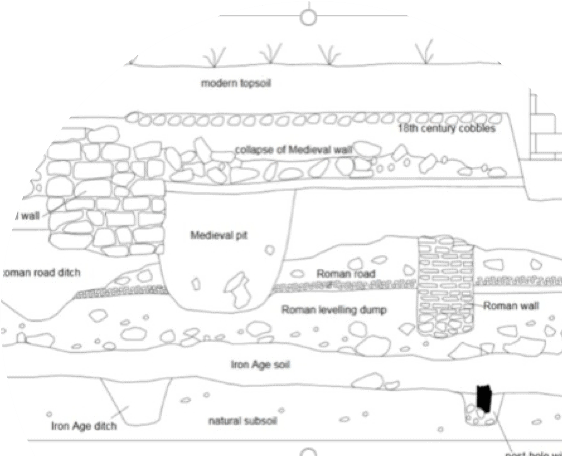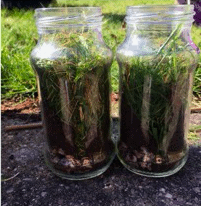
Step 1
Get a clean, clear glass jar. If you don't have a jar you could use a clear plastic tub or container.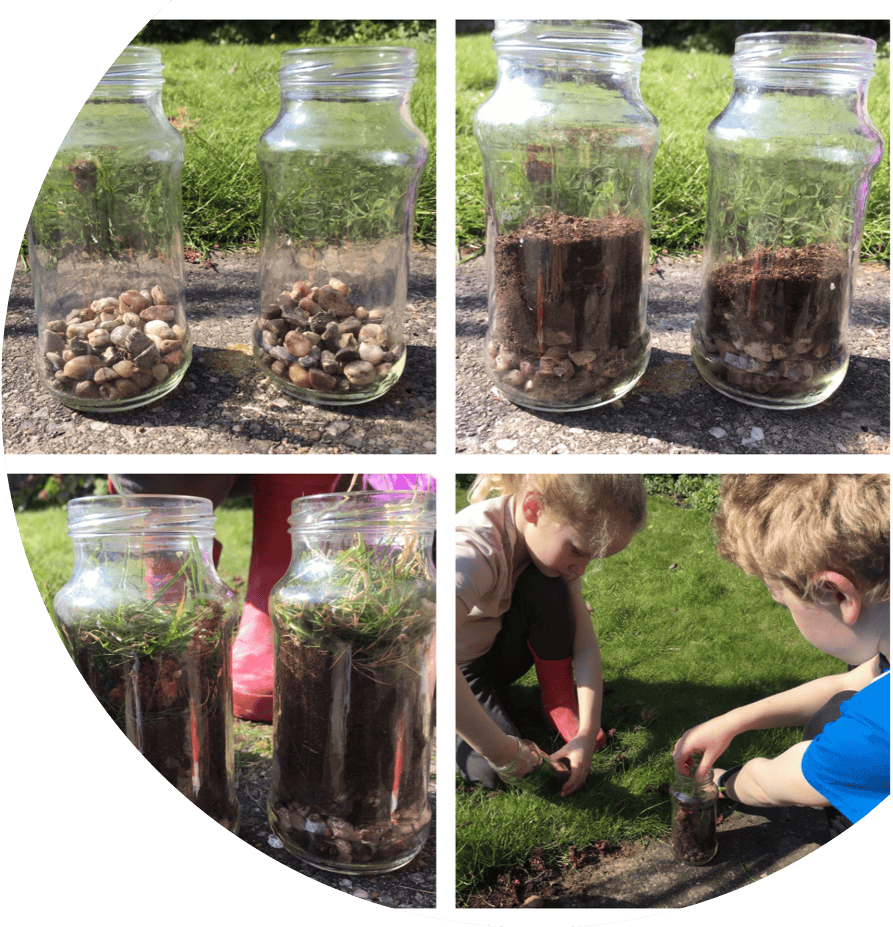
Step 2
Fill your jar in different layers, think about what might be happening in each layer. Does your jar have small stones in the bottom to represent bedrock or a river bed? Add a few different layers, try different textures of soil, sand, stones or any other interesting bits you might find. You could even put a few finds such as buttons into your jar.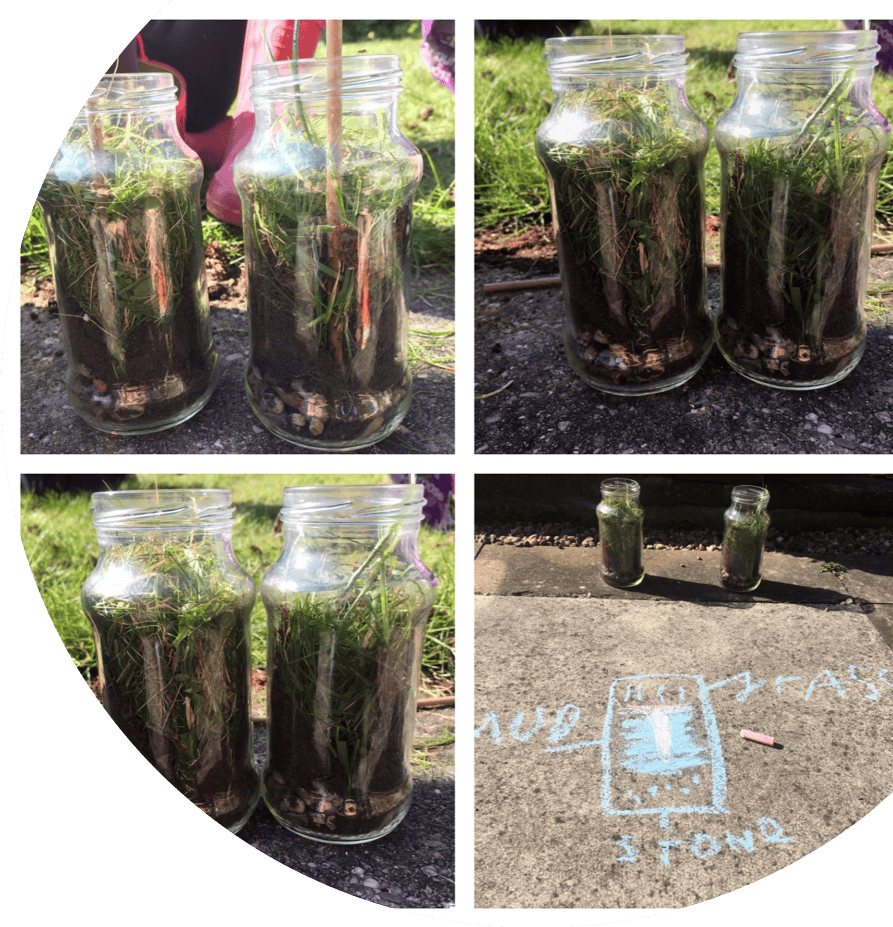
Step 3
Create a post hole! Get a stick and push it down through several layers. Make sure you slide the stick down the side of the jar so you can see it. In the past, people would dig the hole first cutting through the earth, before placing the post in the hole. When archaeologists can see the difference between the filled-in hole and the surrounding earth. We call this a cut. If a post did not stand up straight people might have placed stones around it to keep it stable, archaeologists call these packing stones.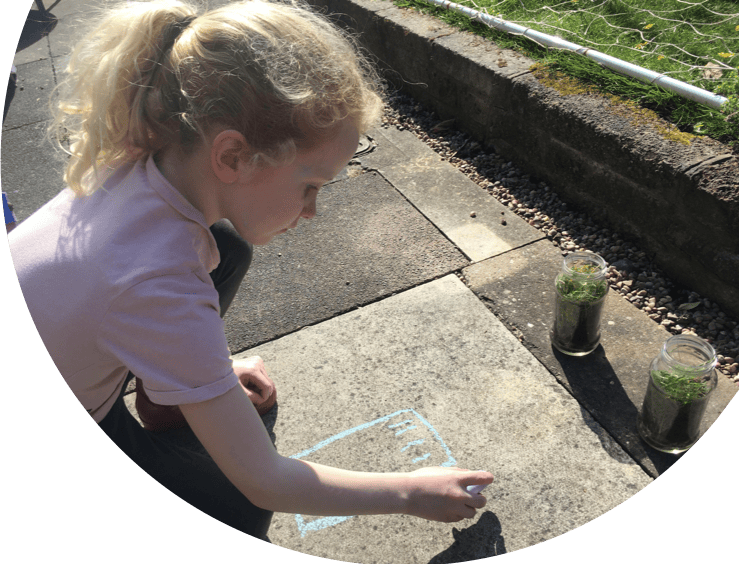
Step 4
Remove your post from the hole. Did any of the soil around the post fall into the hole? In the past, once a building was no longer used and became a ruin, the wood in the post hole would rot. This can make the soil which fills the hole a different colour or texture to the soil around it. Sometimes the hole is filled in quickly and on purpose. Or it can be filled in slowly over time by erosion, soil creep and animal activities.