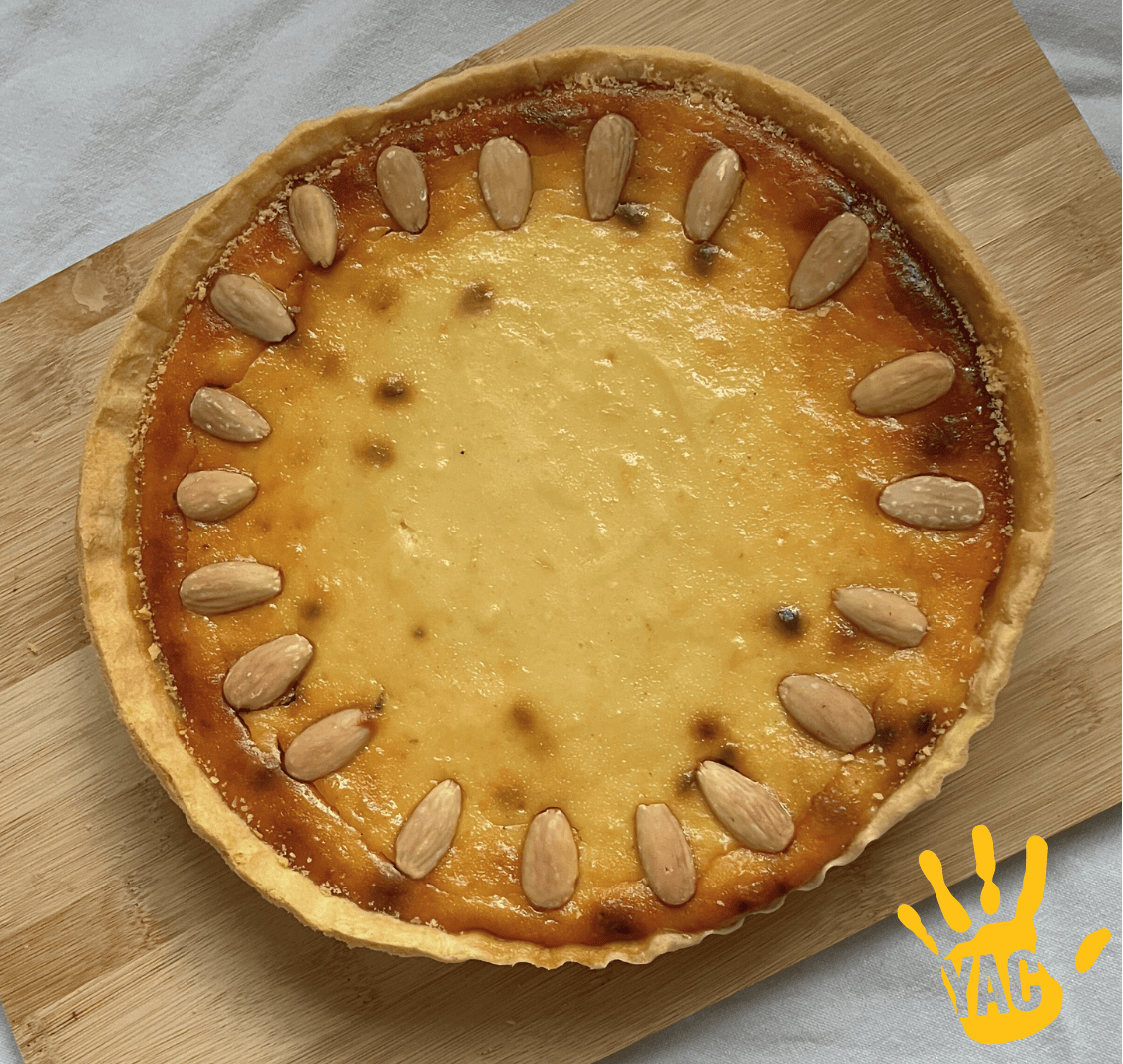
A cheesecake-style tart in a short crust pastry case, decorated with almonds.

Bake a Tudor-style tart!

Get a taste of 16th-century feasting with our delicious recipe for a Tudor-inspired cheesecake tart!

Sugar was rare and expensive in the Tudor period (1485-1603), so sweet dishes relied on the natural sweetness of other ingredients such as honey, fruits and spices to balance buttery pastry and rich creamy cheeses. The increase of global trade in this period meant that more wealthy households could purchase spices such as cinnamon, ginger, anise and cloves to flavour their dishes. Perhaps the most prized of all spices was nutmeg, transported from the Banda Islands in Indonesia. In the 17th century it even became fashionable for wealthy European diners to carry their own pocket-sized nutmeg graters to flaunt their expensive taste.

This recipe is inspired by several recipes from the period 1500-1700 that made pricey nutmeg the star ingredient. You can get creative and swap the lemon for an orange, or experiment with small amounts of different ground spices such as cloves and mace.

Adult supervision is required.

Time Required: 2-2.5 hours

Ingredients

  • Approx 350g short crust pastry dough (homemade or shop-bought), rolled to the thickness of a pound coin
  • Butter for greasing the tin
  • 500g ricotta or curd cheese
  • 200g sour cream
  • 100g golden caster sugar
  • 1 lemon, zested
  • 2 eggs, lightly beaten
  • 3 tbsp currants or raisins (or a mix)
  • 2 tbsp ground almonds
  • ¼ tsp freshly grated nutmeg
  • A small pinch of sea salt
  • Whole blanched almonds to decorate
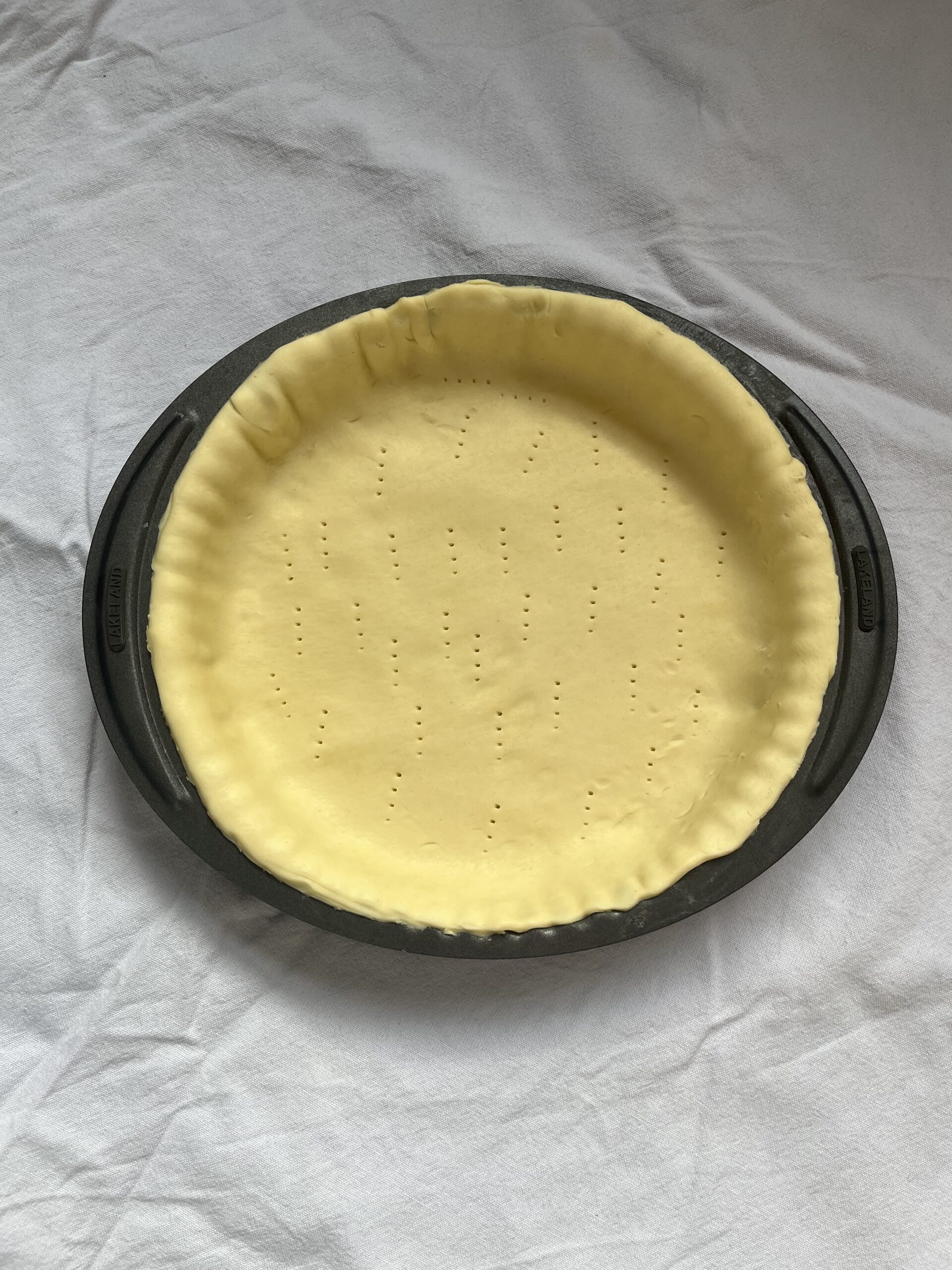
An uncooked pastry case in a metal tin

Step 1

Place a circle of baking paper at the bottom of your tin and rub butter around the edges. Place your rolled sheet of pastry over your tin and gently press into place using a small scrap of pastry to avoid tears. Trim the edges with a small knife. Prick the bottom with a fork and then refrigerate for 30 minutes. Heat the oven to 180°c, or 160°c if using a fan-assisted oven.
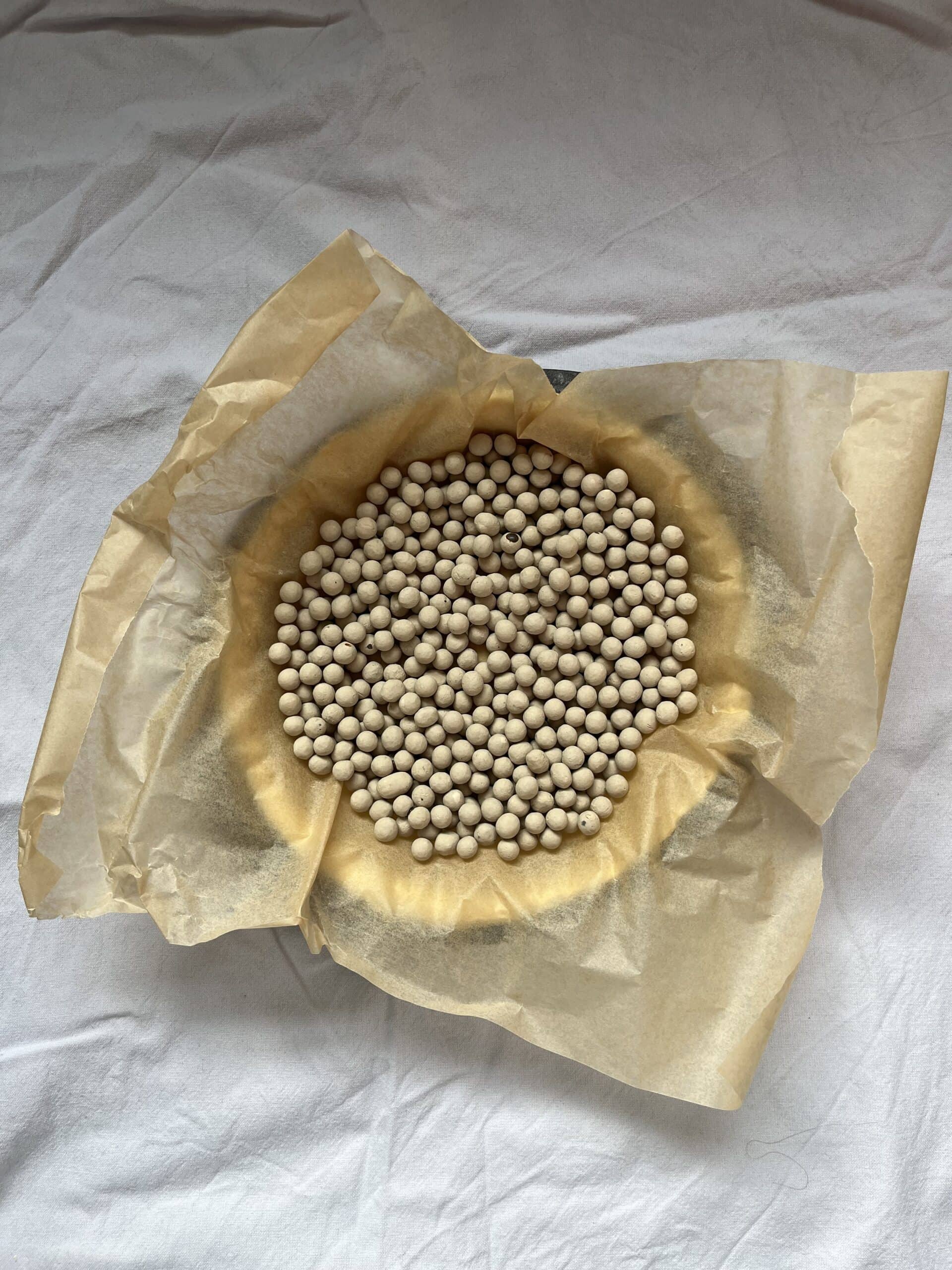
An uncooked pastry case in a metal tin, covered with a piece of brown grease-proof paper and clay baking beans.

Step 2

Cover your pastry case with the large sheet of baking paper and pour in the baking beans or rice. Blind bake for 15 minutes, then remove the beans and paper and bake for a further 5 minutes until a light golden brown colour. Don’t worry if your tart has slightly uneven edges, you can neaten it up later!
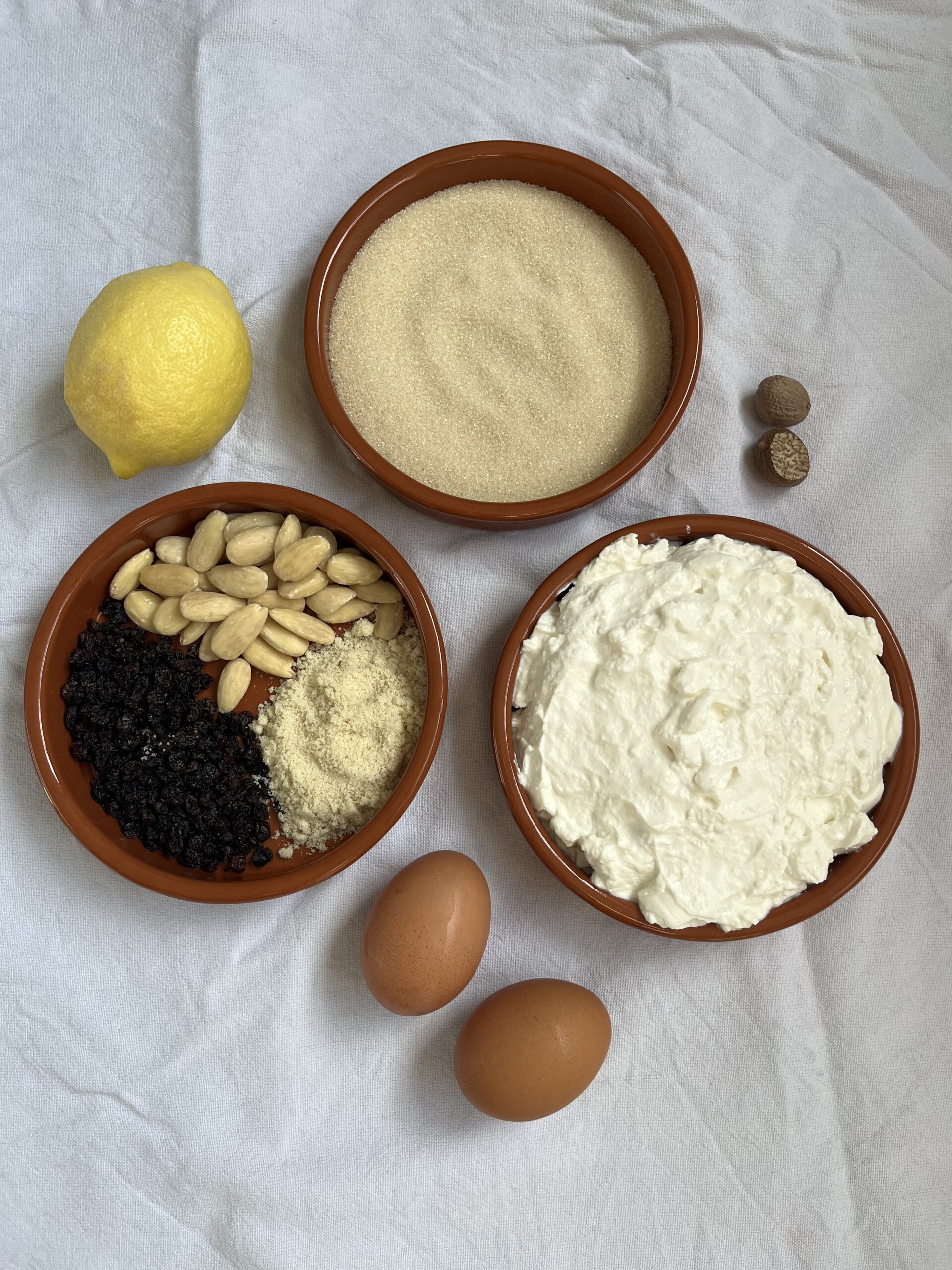
Three small bowls containing sugar, ricotta and a mix of dried currants and almonds, alongside 2 eggs, a lemon and nutmeg.

Step 3

Meanwhile, prepare the ingredients for your filling. Zest the lemon, finely grate the nutmeg and break the eggs into a small bowl.
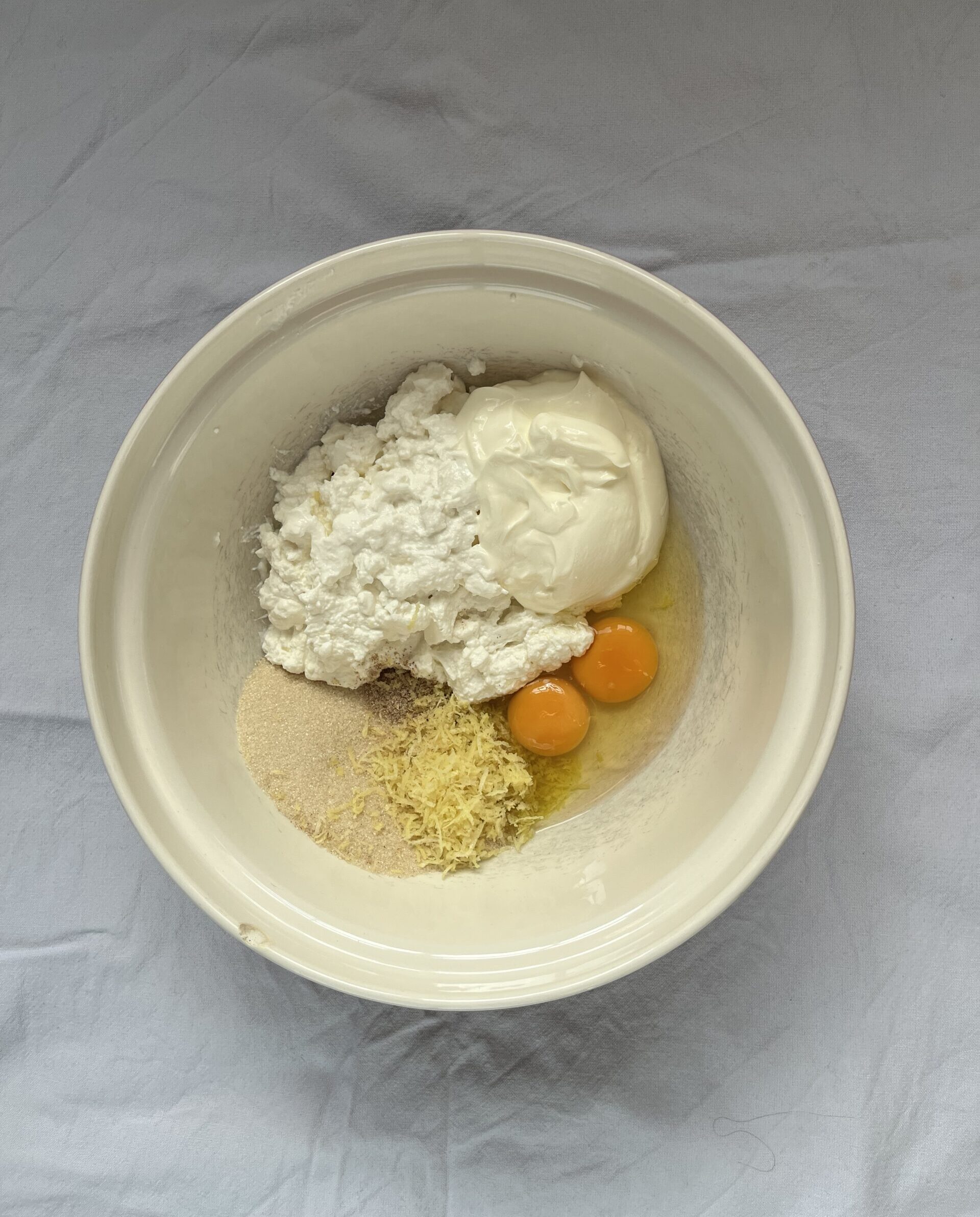
A ceramic mixing bowl containing two raw eggs, sour cream, ricotta, lemon zes and sugar.

Step 4

Put the ricotta or curd cheese in a large mixing bowl with the sour cream, sugar, lemon zest, eggs, grated nutmeg and salt. Mix with a wooden spoon until well combined.
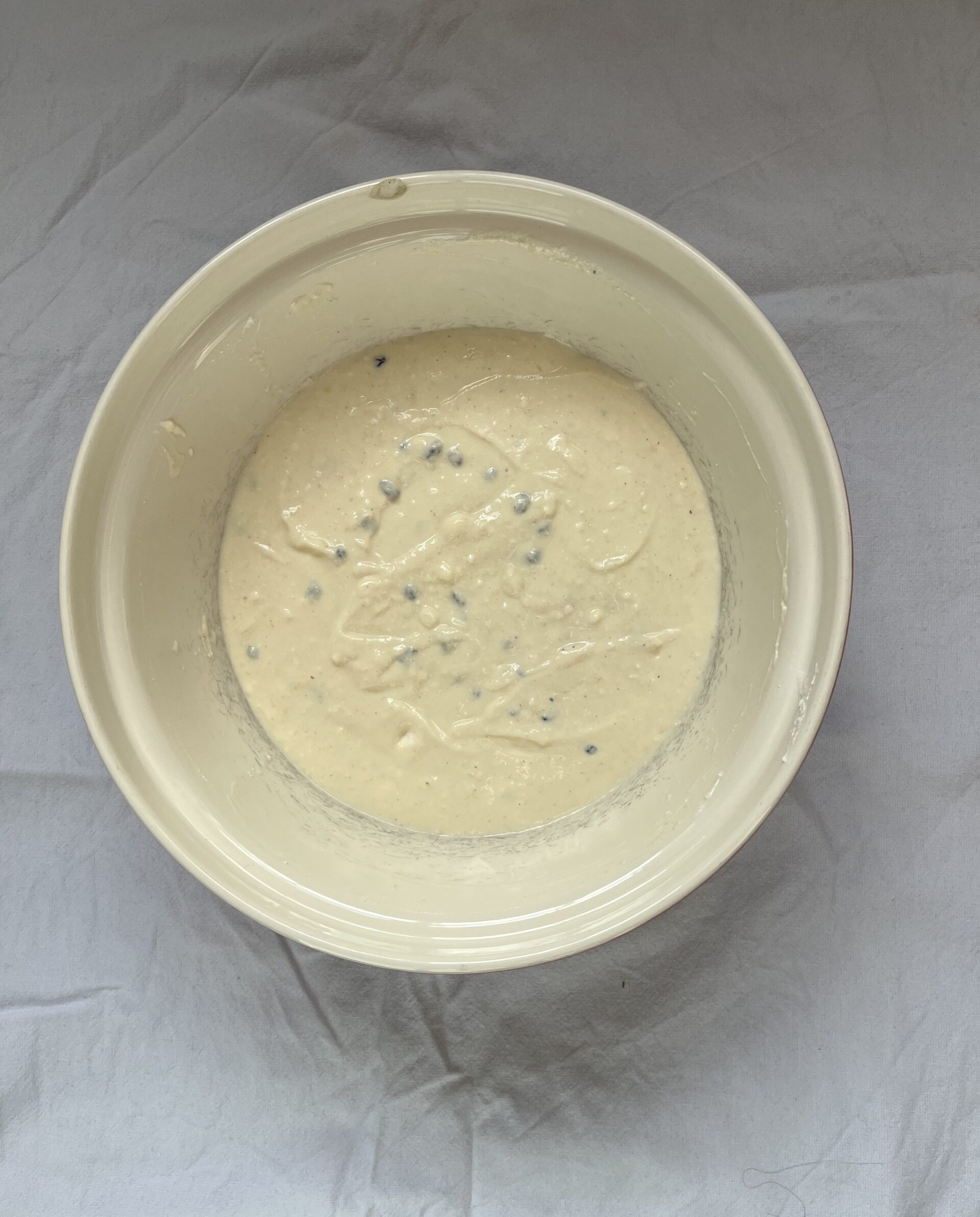
A ceramic mixing bowl containing a raw cheesecake batter.

Step 5

Add the ground almonds and currants or raisins and gently stir to combine.
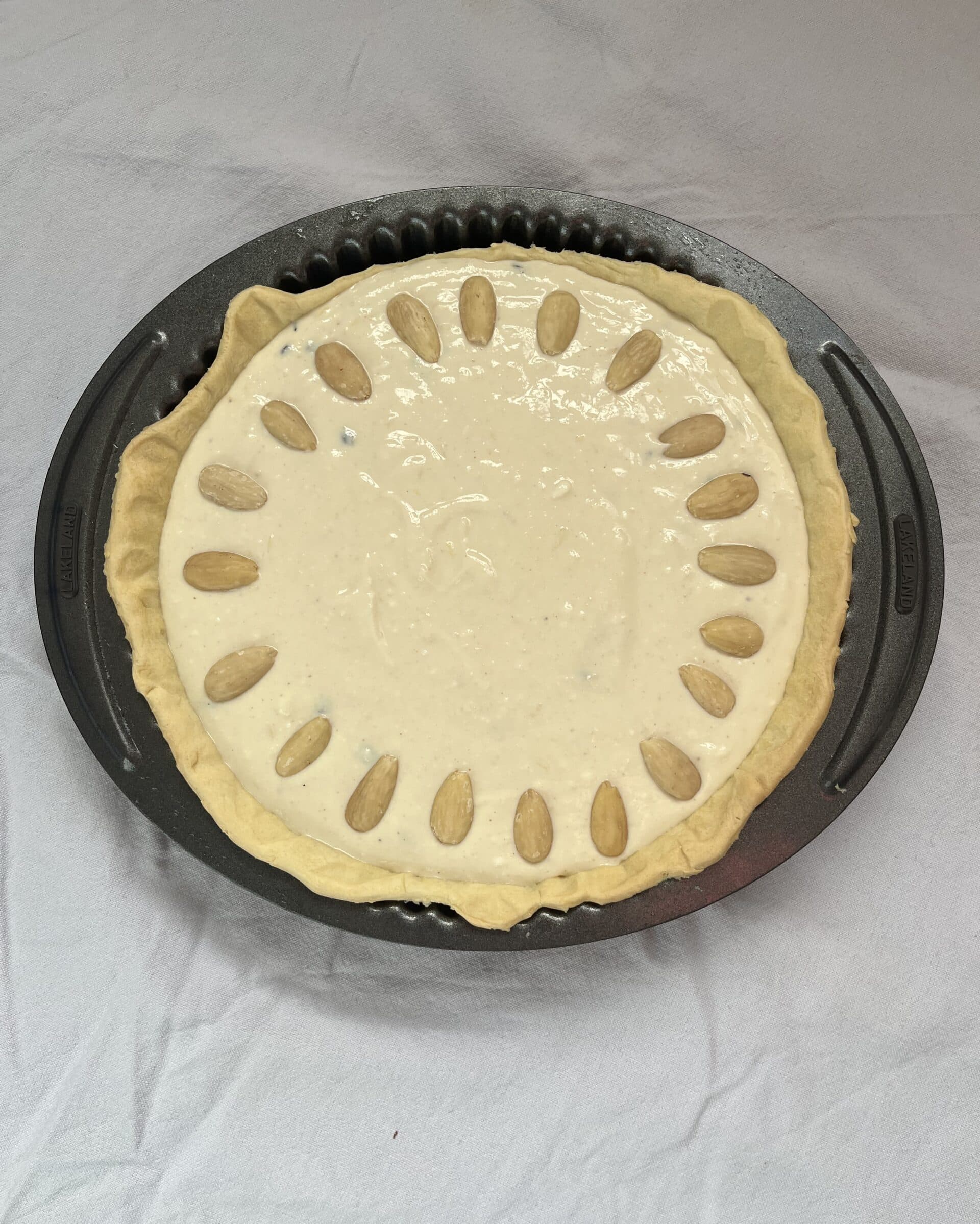
An uncooked cheesecake tart in a pastry case, decorated with almonds.

Step 6

Transfer the mix into your tart tin and arrange the almonds on top.
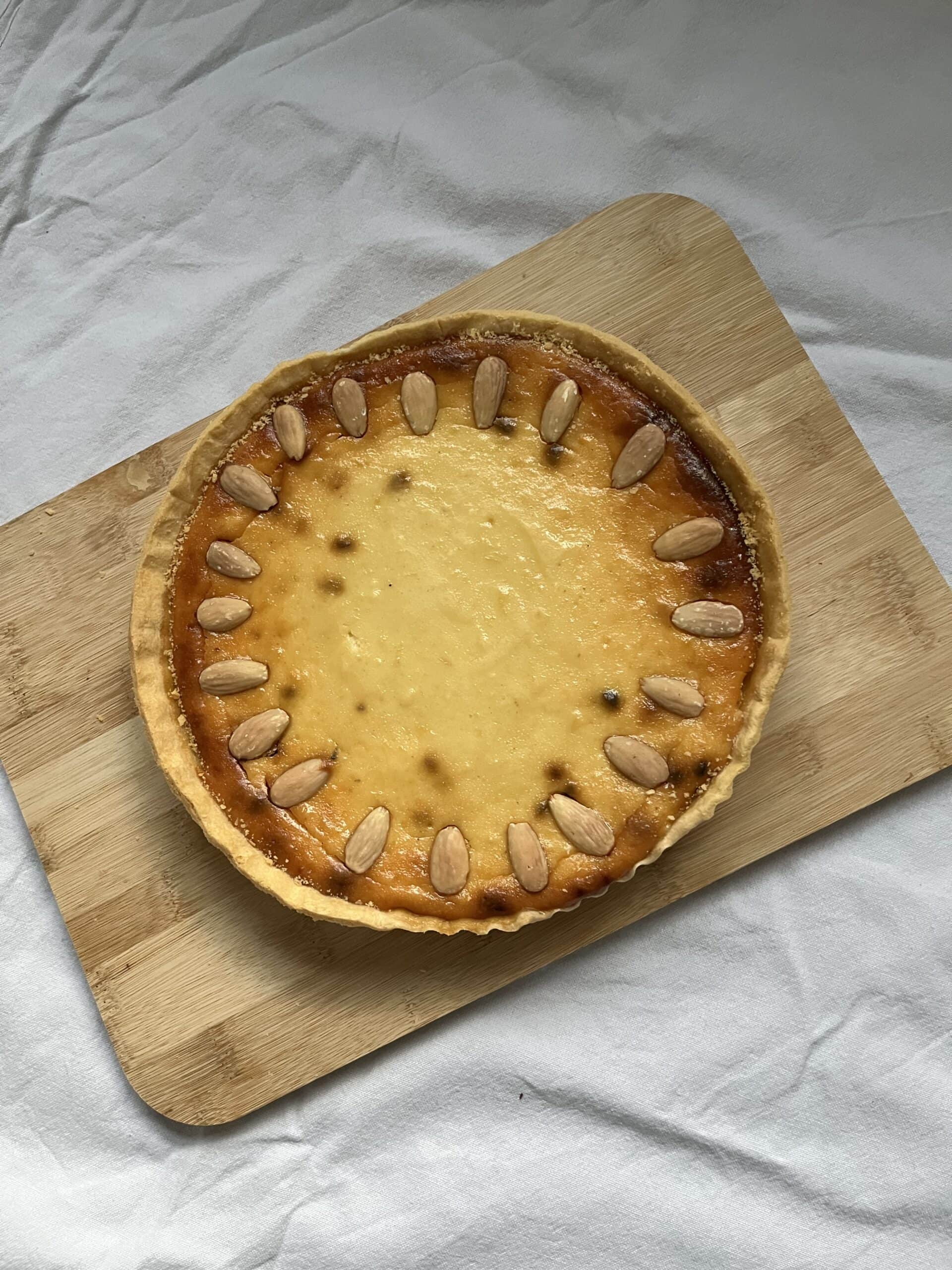
A cheesecake-style tart in a short crust pastry case, decorated with almonds.

Step 7

Bake at 180°c/160°c fan for 1 hour 10 minutes until set but very slightly wobbly and a lovely caramel colour. Then turn the oven off and leave your tart to cool down gradually in the oven for 1 hour before removing. Carefully trim the edges with a sharp knife then refrigerate overnight. Enjoy the next day as part of a Tudor banquet (or at home with a cup of tea).